19 January

Christopher Davies, 17, died from a single knife wound to the abdomen after an altercation with youths outside Upney station in East London. A
17-year-old has been charged with his murder.
3 April

Deborah Smith, 28, was stabbed to death at her home in Blackpool Lancashire while her three-year-old daughter was in the house.
|
A society of growing fear The vast majority of young knife carriers claim they do it for self defence but many admit they are simply afraid. Status can also influence carriers as well as gang culture or pressure from others. Many youngsters think if they get into a conflict they might resolve it by scaring someone off with a knife, and by showing the knife they try to dissuade others from becoming embroiled in a physical confrontation. The message is; they are willing to use the knife. |
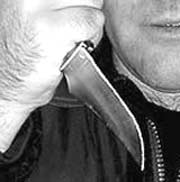
Kevin Everard of the Be Safe project says t hey don't intend any harm, but if they find themselves on the loosing side of a physical confrontation, they can withdraw the knife.
“So what would have been a fist fight becomes a fight that involves knives, in some cases also vicious injuries and in some cases death.”
Simon Winlow says carrying a knife becomes endemic in the socially excluded communities. Once some people start to carry knives, others, primarily male members, feel it is necessary for them too. This builds until carrying a knife becomes a key way of negotiating everyday life.
| "I think it's cool and people respect me because they know I always have a knife." "Angel", 24 |
A vicious circle
Mr Everard claims habitual knife carriers are normally into crime.They may be known as criminals in their neighbourhoods and have a feeling of having to live up to a reputation of being tough. They find the only way to respond to that label is to play up to it and continue the violent lifestyle, and the knife becomes the 'tool of the trade'.
Women are less likely to become violent or portray themselves as physically dominant. It is reasonable to suggest that less women carry knives simply because it is a less part of female identity.