17 June

Nazia Ahmed, 23, was stabbed to death at her home in Lancashire. Her sister who was also stabbed, survived.
28 January

Mahir Osman died two days before his 19th birthday. He had been stabbed in a fight involving up to 30 people outside the Camden Town Tube station in North London. Six men aged between 16 and 24 were arrested in connection with the fatal stabbing.
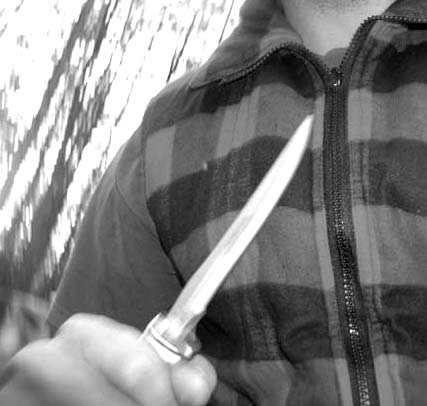 |
An escalating culture of violence Social exclusion plays a major part in the growing culture of violence and use of knives, says sociologist Simon Winlow who last month released the book Violent Night. The core of the problem lies in the changing natures of the economy and industrialization. A big part of what once were functional, working class groups, no longer work and are permanently excluded. |
Simon lectures sociology at the University of York. His main research area has focused on the changing fortunes of what used to be 'the working classes'. He says a whole range of particularly young men, are gradually being discarded from everyday British society.
"They settle into high welfare dependent neighbourhoods where family break-ups are common, they are not in family units, employment or education, and therefore they are not being socially controlled by these institutions."
 |
| Simon Winlow is an author and a lecturer in sociology at York University |
"These social problems can rapidly descend into high crime." Educational institutions teach people the importance of bowing down to authority, the significance of time management and the importance of getting a job. “There is a huge motivation factor if you have to go out and provide for your family." With these institutions being a less part of young mens lives, they may find themselves in forms of behaviour which is far less constrained. Over the last thirty years there has been a huge growth in social exclusion. |
"This is key to making sense of why people carry a knife. The creation of an environment which is constantly threatening produces and makes people value ownership of a weapon."
| “Violence is one product of this gradual historical change.” Simon Winlow |
Be Safe founder Kevin Everard warns that although knive culture is more prevalent in socially excluded areas and inner cities, the problem stretches much further.
| "We must not think about this only as inner city or poverty problems." |