10 January

Zelia Harrison 32, found dead outside a community centre in North West London. The mother-of-two
had been stabbed six times.
16 February

Colin Scott, 42, was found in a flat in Hartlepool with serious injuries. He was taken to hospital where he died shortly after from stab wounds.
|
Regional differences Socially excluded neighbourhoods can be found in almost every big city, but especially in the former industrial centres of nothern England, where working class communities used to be a key feature of city life. These are usually the neighbourhoods considered the most poverty stricken and they have the highest percentage of people who carry knives. Mr Winlow says carrying a knife becomes part of living in those particular cultures and is a socially expected practice. |
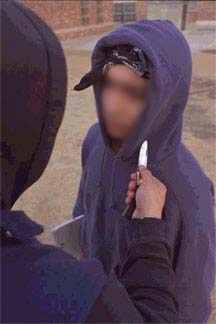
"The fact these people carry a knife has a huge knock on effect on crime in the areas."
Previously the problems of socially excluded neighbourhoods were solved by getting people into jobs and making them part of broader British society and getting them involved in social institutions. Today the practice is getting a distance from problematic marginalized groups and; "Instead of helping them, we put them adrift."
“These people are then drawn into the cultures where the idea of working and submitting to authority becomes less and less a part of how they feel about themselves as individuals or how they make sense of their every day lives.”
Finding jobs
The real problem for those excluded groups is finding a decent job. Normally the only jobs available to them are in the low level service industries, most are unstable and non unionized.
The wages are seldom enough to make them functional members of British society. If problems occur it is expected these people drop out of work and prefer to become welfare dependent.
| “It’s virtually starvation wages; they can just cling on by their fingertips.” Simon Winlow |