FAQ
What is a honey bee?
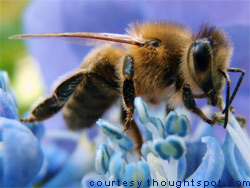
European Honeybee
The bee to the right is a honey bee (not to be confused with a bumble bee).
They are the major pollinator of fruit crops in Britain.
They live as part of a colony in a hive, each hive consisting of up to 50,000 bees.
The study of bees is called apiculture.
What are the factors affecting bees in Britain?
Different factors have been blamed for the diminishing honey bee population:
Many scientists believe the varroa mite is the biggest threat to honey bees in the UK. Read more on this website about the fight against varroa here...
Diseases and viruses affecting honey bees in Britain include European Foulbrood and American Foulbrood among others.
Pesticides used on crops bees pollinate have been blamed by some for affecting bees' brains. Read about the claims here... and listen to what a pesticide comany have to say in an interactive interview...
Some MPs say there is a lack of government funding for research into bee health. Read more...
Climate change, stress on bees and even mobile phones have been blamed.
Some even think it is the bee rapture! Click here for more...
What about Colony Collapse Disorder I have heard about?
Colony Collapse Disorder (CCD) is a termed coined in the USA referring to their mysterious losses of large numbers of bee colonies. According to the National Bee Unit, we do not have CCD in Britain.
In the USA, the government has set aside $80million for research into CCD. Commercial beekeeping is a huge industry in North America, as millions of bees are shipped around the country to pollinate crops.
Click here for a report on CCD in America from The New York Times.


