
GREEN BRITAIN
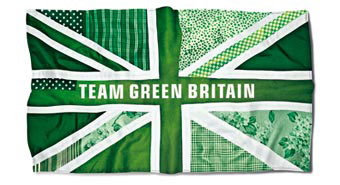 A new green campaign is invading the UK, and it’s called Team Green Britain.
The concept is to encourage people to join one of their green teams.
The ‘Team Big Lunch’ consists of organising a lunch with neighbours, as a tool to strengthen communities; the ‘Ecoteams’ is a group of friends, colleagues, neighbours… aims at minimising the energy they use to cutting down on the stuff they throw away; the ‘Team Energy’ is about cutting the energy we use in our homes; ‘Team Swap’ suggests to swap your old stuff for someone else’s old stuff; and the ‘Team A to B’ is about making as many of our journeys as green as possible.
The plan is for Britain to get greener by 2012 when the whole world will be scrutinising the host country of the Olympics.
For that, the organisation has marked our calendar with a green date. On the 10 July 2009, Green Britain Day will kick off the Eden Project with a prestigious host: musician Paul Weller.
The event will be punctuated by workshops where people could learn how to buy local goods. There will be Swap Shops where people can exchange anything from fashion statements they’ve made once too often to books they’re never going to read. And a ‘Bike Surgery’ will offer free check-ups to see whether their trusty bike's still fit for the road.
There are already 433,069 members of the Team Green Britain and all their small things added up, Britain could really be leading the race against climate change…
“PLEDGE NOW !”
‘Recycle week’ was launched yesterday (22 /06) across the UK and will last until Sunday (28/06).
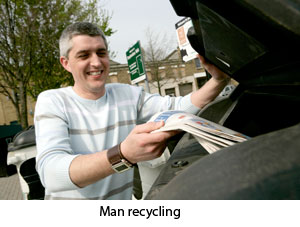 For the first time in five years ago, the programme organised by WRAP (Waste & Resources Action Programme) which is funded by the government, will be promoting a waste reduction message.
WRAP chief executive Liz Goodwin said: "The theme for this year's Recycle Week is, ‘Let's Waste Less' and the week's activities are designed around the many, small ways we can each reduce our waste which, when taken together, makes a big difference.
"The good news is that two-thirds of us now consider ourselves committed recyclers, and we are currently recycling 34% of our household waste across the UK.”
Recyclenow.com made it clear, this year’s slogan is “Pledge now!” Sophie Hadden from WRAP said: “This year, for the first time, we’re asking people to get involved with Recycle Week by ‘pledging’ to do one thing -or more if they like- that will help result in less waste.
Jane Hall from Recycle Now said: "The pledges will all help to make a difference, and some may even save you some money in the process. For example, wasting less food may save families as much as £50 a month.”
Since its inception, Recycle Week has helped saving 30 million tonnes of CO2.
CRISIS FATHERS INVENTIONS
 If necessity fathers creativity, the economic crisis is a windfall for inventors. Companies, patents brokers, research or development groups, private or state organisations and laboratories are trying to make a selling point of the crisis.
The international patents organisation, OMPI, does not have the figures of new patents demands for 2009, but it is believed that the crisis is already generating new inventions.
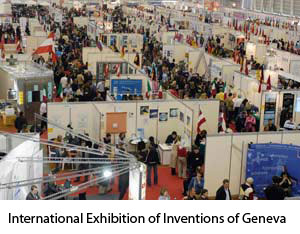
At the 37th International Exhibition of Inventions of Geneva, the president-founder Jean-Luc Vincent noticed “an inflow of inventors stimulated by the emergency of finding solutions, especially in areas such as ecology and public health”.
He said each participant praised the gloomy economic climate in his own terms. Mr Vincent acknowledges they have lost some regular exhibitors touched by the credit crunch.
Assistant manager of the exhibition Anne Loertscher said: “There are more and more research institutes, universities or state organisations and fewer private inventors.”
But she says that the fair gives everyone a space “as long as they meet the criteria of entrance.” Inventors must have creations “already protected by intellectual property rights” in order to participate in the exhibition.
Mrs Loertscher acknowledged some private inventors may have been put off due to the cost of entrance fees, the price of patents and stand rental costs.
PATENT'S WAR OVER THE CRISIS
Finding ways to weather the global economic crisis is a concern of all industrialised countries, and as such patents are the new gold rush.
A spokesperson of the Inpi (the French National Institute of the Intellectual property) said: “In tough times, research and development are the last things that we sacrifice”.
Yet the worldwide patents’ system is not entirely protected.
The American magazine Photonics Spectra, revealed the unscrupulous exploitation of patents by certain firms known as “trolls”. The technique is to identify small companies owning their copyright but who cannot fund a legal defence against large companies who sell very similar products. The “trolls” would buy their patents and threaten to sue those companies, explains Photonics Spectra.
Christian Harbulot, Director of The School of Economic War in Paris, says: “if the world of patents is well structured in terms of international regulation, it is true that new emergent economy, eager to catch up in terms of innovation, could weaken the controlling system originated by the Western world.”
Also, there are major interests in tackling the crisis not only for the sake of it but to respond to a demand and take it on to the new market.
The crisis is in itself a war where ideas and protection of those ideas are part of economic strategies.