LET'S ALL REUSE !
 While Mary Portas, 'Queen of Charity Shops', is trying to attract new people through the doors of charity shops, many are resorting to alternative ways to stay in fashion during the financial crisis.
Budget conscious shoppers now update their wardrobe for pennies. In competition with low cost fashion chains, recycling shops, second-hand and swapping parties want to tackle the era of fast clothing.
Yolande, a member of the “London: we all reuse” group, says: “I’m into making a difference to the environment and recycling clothes as opposed to buying more and more”.
Consumers who worry about ethical shopping and the environment as well as their own spending seem to have found a route to a greener way to shop where everybody wins.
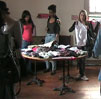
Lori Wiechec, organiser of swapping parties in London says that what she calls the “Primark Effect” is a “sociological blight”. “When you go comfort shopping in Primark, the clothes are so cheap that they have no value. Here you give a second life to the clothes that you don’t wear anymore”
The 30-year-old from Portland, Oregon, attended her first swap back home 14 years ago: “There was a big tent in a park and everybody dumped their stuff and then came out wearing five skirts over trousers.” When she needed an idea for her MBA final project at the London College of Communication, she recalled the swap party and imported it to the UK. “We started reading about swaps abroad and thought that they could really work in London.
Wiechec suggests that swapping could be a key part of the future of shopping: “When I started doing it 3 ½ years ago, swapping clothes was a complete new concept, I think we were the first ones doing it in London. Now it’s become more popular as people try to find alternatives to buying expensive clothes.”
“I’m into making a difference to the environment and recycling clothes as opposed to buying more and more”. Yolande, clothes swapper.
The recession has also inspired a thrift wave that pushes consumers to fix their pieces of clothing rather than throwing them away. The UK’s shoe repairing brand Timpson has observed an increase of shoe and watch fixings. They said: “New clients are coming here to get their belongings fixed whereas they have never thought of doing this before. A new mentality is settling: people are now resourceful, they start mending their clothes instead of buying new ones.”

The stigma attached to buying second-hand is slowly disappearing while recycled clothes are considered as the new vintage. It is proudly that individuals would buy an old tee-shirt transformed into a dress. The Dutch shop of recycled clothes, Episode, is currently skyrocketing.
“The head office buys old clothes per kilos from charity associations that prefer the cash for their humanitarian projects rather than unsuitable clothes. They transform them in their sewing shop in the Netherlands to be displayed in their six shops across Europe, says manager of the London shop, Roweena Harrison.
She says: “We have constantly new customers as vintage and recycling are getting trendy and fashionable.”
Conscious about giving a second life to their clothes, trendsetting consumers could put an end of fast clothing.
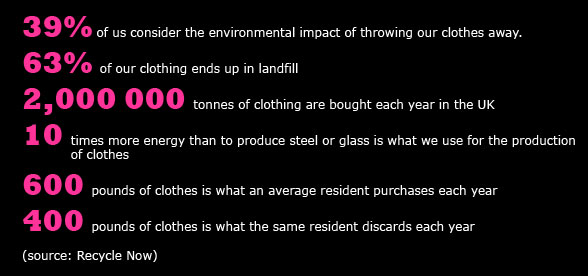
THE COST OF FASHION

LINKS