
Lives are saved with animal testing
1726 - Stephen Hales first measures blood pressure in a horse.
1796 - Edward Jenner develops the world's first vaccine against smallpox. Critics express scepticism, calling it ungodly to innoculate people with material from cows.

vaccine - from the Latin vaccinus, meaning from cows
1881 - Louis Pasteur proves the germ theory of disease by innoculating sheep against anthrax.
1885 - Louis Pasteur develops a vaccine for rabies.
1902 - Robert Ross wins the Nobel Prize for his work using pigeons, showing how malaria is transmitted.
1922 - Researchers isolate insulin. In 1923 Dr F. Banting and Dr J. MacLeod win the Nobel Prize for the discovery.
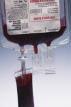
1901-1939 - Animal research advances understanding of blood, making transfusions possible.
1950s - Open heart surgery and cardiac pacemakers developed.
Read more...
Or is it unnecessary?
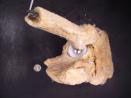
Artificial hip - the inventor John Charnley refused to experiment on animals. The hip he developed is still considered the 'gold standard' by orthopaedic surgeons.
Childhood (acute) leukaemia drug - the first effective drugs for childhood leukaemia were introduced in the 1940s through study on patients. They were not tested on animal leukaemias until after they were shown to be useful in people.
Asthma drug - sodium cromoglycate (Intal) is used to prevent asthma. It was discovered by a doctor who had little faith in animal experiments. He was allergic to guinea pigs so he exposed himself to them to induce asthma attacks, against which he tested over 600 new drugs.
And dangerous?
The introduction of blood transfusion was delayed over 200 years and corneal transplants by 90 because of misleading animal tests.