CLINICAL APPROACH

The controversial HFE Bill is currently being discussed in parliament. Existing legislation from 1990 requires IVF clinics to consider the "welfare" of any child created. That currently means considering the need for a father.
The new Bill says this should no longer be the case. People in favour of the changes believe lifting the need to consider a father will enable more lesbian couples to experience IVF.
Critics are worried that this will mean some children will from birth never know the concept of a father.
So are the changes really necessary or more symbolic – did lesbian couples ever experience much difficulty before with clinics?
“The bill won’t affect the way we run at all” says Tim Mott from the Bridge Fertility Clinic in London Bridge .
“The Bridge centre have always had their own policies on treating same-sex couples and taking out the need for a father figure will be incidental to our process really” he continues.
Mr Mott has been a spokesperson for the Bridge centre for over five years and considers the clinic a pioneer for treating homosexual couples through IVF.
However, clinics like The Bridge centre are in a minority and many people feel this symbolic gesture by the government will mean that a lot of gay couples will be more encouraged to experience IVF.
BRIGHTER FUTURE?

Linda Riley, editor of G3 magazine, went through IVF with her partner last year, they now have twin girls. “Obviously I went through this before these changes were being debated – but I think it’s a step in the right direction for our cause.”
“I wouldn’t say we experienced discrimination but it was strongly pressed on me and my partner to consider a father" says Ms Toney. “And more than that we had to show and tell who they would be, what they would do and why we felt they were suitable.”
Even for pioneers like Mr Mott the changes are welcome: “We know that it’s necessary to continue to regulate and maintain the standards of treatment in fertility centres. But what we can be especially sure of is that the social regulation of fertility patients, as provided for in the 1990 Act, is no longer necessary or fair.”
Mr Mott believes the reason that the bill has been allowed to focus on the regulation of parents is because the people they are discussing (same sex couples who want to conceive) are notoriously a group that want to be left alone.
“These couples have to go through long and painful procedures to conceive and of course they feel vulnerable and in a minority – which is why they may not feel inspired to fight prejudice” he says.
PREJUDICE

Prejudice as Ms Riley discovered, comes in many forms and interestingly – it hasn’t ever been directed from an official clinic.
The first one came from a fellow parent who banned his child from attending her twins’ first birthday when he found out his parents were gay. Ms Riley says of the incident “I was just glad they were too young to understand the situation, we are fortunate I think that they are twins as they will always have each other hopefully which makes it slightly more difficult to bully them as a unit.”
The second came when US customs wouldn’t let Ms Riley’s partner and two children through as a “family” unit. “This is a problem we will find becomes more difficult when the girls are older”.
HEALTH DANGERS
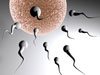
One of the very real consequences of same-sex couples fearing discrimination from clinics is that they may gravitate towards more unofficial means instead. This could be advertising in the gay media for a surrogate or sperm donor and it can mean using unscreened sperm and tricky legal issues.
Of course in reality not all couples are as fortunate as Ms Toney and her partner as to be able to afford the high fees for IVF. Ms Riley states “Even if we didn’t take the clinic route and had used an advert/friend for sperm we wouldn’t have done it without screening because the health risks would be too much of a worry”.
Email me here
THE BILL
What constitutes a real family?
“It’s about seeing gay people in different roles –people may have accepted that we exist – but they’re not necessarily happy to see us raising children and letting them learn by our example”
Protestors to changes in the bill plead for the sacred notion of the nuclear family – with mum and dad raising the kids. Of course today with single parents, grandparents, legal guardians and foster carers all busy raising kids happily – this notion seems outdated.
However, the wording of the bill specifically states: 'No man is to be treated as the father of the child.' So is there a difference between a child through unfortunate circumstances losing a parent, and a child specifically and deliberately being denied a father from birth?
Dan Boucher, from Christian charity CARE, said: 'The Government is facilitating the creation of children with the intention they should be denied a father from before they are born, when the balance of established research shows fathers bring something important and distinctive to parenting.
'We cannot ignore this without giving the impression that we are more anxious to champion the rights of adults than we are to promote the best interests of children.'
This is an interesting charge to lay down – after all in this era of wanting what we want when we want It – are we tampering with nature just to satisfy their own needs without considering the child?
The Christian Medical Fellowship – a support system for Christian doctors and medical students – is clear on this matter:
“Defending the fatherless children is a Christian duty and it is fundamentally wrong to create children without any regard for 'the need of that child for a father”
The CMF was founded in 1949 and has over 4,500 British doctor members in all branches of medicine, and over 1,000 student members. They are linked with around 60 similar inter-denominational bodies worldwide.
They claim to strongly uphold the historic Christian teaching that children should be born into a family headed by two parents of the opposite sex, legally married for life.
They continue: “The ‘rights’ of adults to become parents should always be secondary to the welfare and best interests of the child.”
Helen Ward from gay rights charity Stonewall makes a valid point: “I dislike the term “right” when it comes to having children – I mean as a woman I have a biological right to have a child – it's my most fundamental right.” So what of male homosexual couples who do not have such clear biological avenues?
“People use the idea of biology and what feels natural to cover up what they really feel – a dislike for the gay way of life.” She continues: “Obviously there is more tolerance than thirty years ago – but it’s about seeing gay people in different roles –people may have accepted that we exist – but they’re not necessarily happy to see us raising children and letting them learn by our example.”
SO - IS THERE ANY ADVANTAGE TO HAVING TWO MUMS?
According to lesbian mother Linda Riley - not particularly, only in having two loving parents:
"I can only compare it to my own childhood where I only had one parent and I guess the children benefit from the attention/love of two parents".
She continues: "we are very typical of any two parent family trying to work and share child-care the only difference is that we are a same-sex couple".