The blame game
The argument dividing scientists in the 21st century is whether climate change is a natural occurrence or caused by human activity.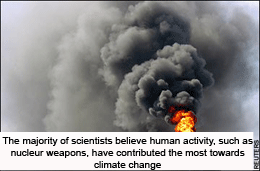
The root of this controversial war could potentially divulge the truth about whether climate change is cause for concern or simply a media fear-mongering frenzy.
The theory that climate change is a natural phenomenon relies on the notion that the earth warms and cools at 100,000 year cycles, with 80,000 years of ice age and 10,000 years of warming.
Professor Robert Carter, palaeoclimatologist and author of ‘Climate: the Counter Consensus,’ said, “There is no evidence that the climate changes we observe today are any different from those of the past, and the null hypothesis (that they are caused by natural agents) remains valid.
“There is far too much attention paid to speculative computer models and far too little paid to actual data about past weather. Yes, there has been a mild gentle warming in the 20th century that peaked in 1998, but since then the earth has been gently cooling.”
John R. Christy, director of the Earth System Science Centre in the US, said, “Evidence indicates most of the change in the past 150 years is natural.”
An article in the New Scientist, however, disproved many of the theories linking climate change to natural causes, including the theory that the earth will now continue it's natural cooling cycle. It said, "The Earth is still warming and even if the sun's intensity does fall, it will not outweigh the effect of rising greenhouse gases."
This year, a survey carried out by Cardiff University psychology department found that 47 percent of people think the cause of climate change is a combination of human activity and natural processes with 31 percent blaming human activity alone.
The Met Office, in a review of the climate research publications undertaken since 2007, concluded in March that the only plausible argument for global warming was when the amount of carbon dioxide emitted into the atmosphere from human activity was seriously considered.
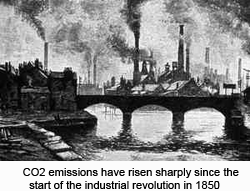 Peter Stott, head of climate monitoring at the Met Office, said, “The science reveals a consistent picture of global change that clearly bears the fingerprint of man-made greenhouse gas emissions. This shows the evidence of climate change has gone beyond temperature increases — it is now visible across our climate system and all regions of the planet.
“Our climate is changing now and it’s very likely human activity is to blame,” he added.
Vinuta Gopal, climate change campaigner for Greenpeace India, said, "The international scientific consensus on climate change is clear. The IPCC's Fourth Assessment Report (AR4) stated that ‘warming of the climate system is unequivocal’ and that there is a 90 percent probability that most of the warming since 1950 has been caused by the rapid increase in greenhouse gas concentrations."
Although this argument is prominent to climate change discussions in the West, in India, where Reuters reported an increase in temperature has killed hundreds. The issue of where to place the blame is not people's top priority.
Shiva Patel, a teacher who lives in New Delhi, said, “There is no point finding something to blame, our main concern is how we will cope with a further rise in temperature in the future.”
blog comments powered by Disqus