

 READ:
Strict quarantine rules for rescue dogs to be relaxed?

READ:
Could British rescue teams have saved more lives?

READ:
Funding dilemma of search and rescue dog teams

PROFILE:
Mesut & Maya from Turkey
Strict quarantine rules for search and rescue dogs to be relaxed?
UK Search and Rescue dog teams are negotiating with the government to relax the strict anti-rabies quarantine rules for search and rescue dogs.
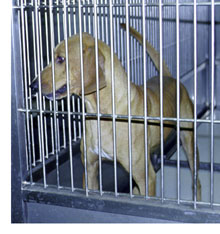 UK Search and rescue dogs have to be put into quarantine for six months after working abroad, according to the current legislation. The rule is to protect the UK from rabies and covers all search and rescue dogs that return from countries which do not have anti-rabies rules.
Whilst in quarantine the dogs are kept in cages approximately 3ft wide with a 15ft run.
Robin Furness from Hampshire Fire Service Urban Search and Rescue (USAR) dog team says: “We are working with the government at the moment through an agricultural agency. Because of the work our dogs do we are hoping to get the quarantine period reduce to three months. We have received a very good response from the government.”
The Department for Environment, Food and Rural Affairs (DEFRA) states that six months is the “ideal time” to prevent rabies whereas some dog handlers do not see the logic of this anti-rabies rule.
Speaking about the problem, Peter Griffiths, a vet from AfriVet Veterinary Clinic in Poole says: “The rabies vaccine has two parts. We tend to give a single vaccine and then we blood test between two or three weeks after the vaccine has given.”
“The blood test is for the anti-body levels for the rabies. As far as the pet passport is concerned the antibody levels have to be about 0.5 iu (international units) per millilitre of blood. It is the requirement of the Pet Travel Scheme.”
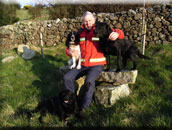 Neil Powell, a dog handler and trainer who has seven dogs, says “…if the dogs are tested before they go and tested when they come back and their blood checked on the weekly basis. Why should they have to spend six months in quarantine kennel?”
He continues: “For a dog to be protected there must be 0.5 units of anti-bodies per millilitre in their blood. Our dogs are going away with 0.6 or 0.8 units per millilitre. They really are well protected and yet they still have to go into quarantine.”
A spokesperson for DEFRA says that six months quarantine period gives them a chance to establish the state of the dogs’ health, she continues: “...a blood sampling test could show the anti-bodies, or it could be that the dog actually has got rabies. By the end of the quarantine period rabies would show itself or even kill the dog.”
The spokesperson for DEFRA adds they have no idea what the dogs may have encountered during their rescue work in another country.
However, Mr Powell says that the dogs are under their control when they travel overseas for disaster rescue:
Mr Powell explains how his two dogs were traumatized by after spending six months in quarantine:
Another dog handler, Paul Baker of Hampshire Fire and Rescue Service Urban Search and Rescue Dog Teams (USAR), acknowledges that the six months quarantine period is to protect the country from rabies. However, he calls for a shorter quarantine time and talks about the difficulties they face as dog handlers after quarantine:
However, UK military dogs that go overseas have a privilege during the quarantine period. A spokeswoman from Ministry of Defence says:
"…handlers are allowed access to their dogs during this period, as a pet owner would be allowed access to their animal held in quarantine.”
Robin Furness says that some teams have devised strategies such as sending their dogs to America for quarantine, since the dogs can receive training during the quarantine period there.
“We do this because our dogs are kept caged in the UK. They are working dogs, they need to be working. Otherwise they lose interest.”

NEWS: A rescue dog cloned
A rescue dog which worked in 9/11 cloned in the USA bringing up the debate of pet cloning in the UK. MORE

NEWS:
Three 60's challenge completed
Three Mountain Rescue team members from North Wales who travelled to Yosemite National Park in America to raise funds returned home this week... MORE

NEWS:
Microchip dogs for life
The National Microchip Month campaign is running throughout June in the UK to get all pets identified permanently through the painless process of inserting a microchip... MORE
NEWS:
Search and rescue team seeks new volunteers
Wiltshire Search and Rescue (WILSAR) group is having a meeting tomorrow, June 10, at 7.30pm in Devizes to meet new members. MORE