




 |
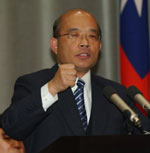
"Any great development has its cost." - Former Prime Minister Su Tseng-Chang |
|
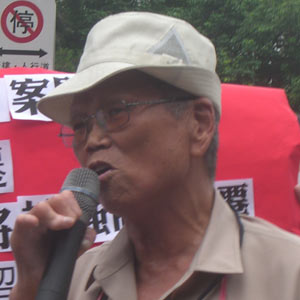
"I would rather die than leave the Losheng Sanatorium!" - Leader of Losheng Self-help Group Lee Tien-Pei |
People in Taiwan had hardly heard about Losheng Leprosy Sanatorium until a few months ago. Established in 1930 as a dedicated leprosy treatment facility, Losheng is not only a legacy of the Japanese colonial past but also a witness to medical history. Due to the isolation policies in the past for the prevention of epidemics, Losheng was a quiet retreat in the outskirts of town. In 1954, the Taiwanese government abolished the isolation policy, but many recovered patients preferred to stay in Losheng. They had got used to life in the compound and had become family to each other. Most wished to live a peaceful and quiet life in Losheng to the end of their lives. In 1994, Losheng was chosen as a reserved site for a metro terminal. Residents didn ’t face the move until 2003 when some buildings were demolished. A few experts began to appeal to the government to take action to protect the historic heritage. More and more people, mostly students, have joined the campaign since then. After years of protest, the outcry from Losheng was finally heard. Former Prime Minister Su Tseng-Chang agreed to review the construction plan in April. The result was announced in May that 50 percent of Losheng will be protected. Whether the controversy will end soon is unknown; many issues are apparently worth further discussion:
|
||||||||||||||||||||||||




 |
For the purpose of a visitor survey, a CHINESE version of the video and audio materials can be found HERE. 感謝您的參觀,請由此進入影音報導中文網頁 |