
- No choice?
- No Assumptions
- Yawning Gap
No Choice?
Anne McGuire is the Minister for Disabled People and Roger Berry is the Secretary of the All Party Disability Group. Both are Labour MPs and both are well-versed in issues surrounding disability. But both refer to the 'cliff edge' in a different manner, one referred to it in the past tense, the other in the present tense. So does it exist?
In their report this year, the charity Livability documented the barriers young disabled people face going through transition. For years it has been known as a cliff edge (as defined on the home page) and the report highlights many examples that support the view that there is a cliff edge.

Rachael Christophides: "Little or no choice"
It argues that: "The vast majority of young people have little or no choice over where they live, who they live with and how they spend their time."
Rachael Christophides wrote the report and points out how this ties into the wider situation: "It's very nice that the government has set out what's going to happen but that doesn't necessarily translate into action, it's not a mechanism for driving change on the ground."
A number of different strategies, consultations or policy proposals have been released since 1997 raising the issue. Aiming High for Disabled Children (2007) noted that 'disabled young people may face more challenges than most in the critical transition to adulthood.' and in 2005 Improving Life Chances said: "The benefits of effective early years intervention will be lost if disabled young people's transition through childhood into adulthood is not managed effectively." 'And in 2001, their Valuing People paper for people with learning disabilities it reported that there was 'poor planning for young disabled people at the point of transition into adulthood.'
When pressed on the accusation that there is too much writing and not enough action, Anne McGuire told me: "I think it's important that if we're going to do it we should get it right and the way of getting it right is to actually work with disabled people to make sure we are responding their ambitions and aspirations and not making assumptions."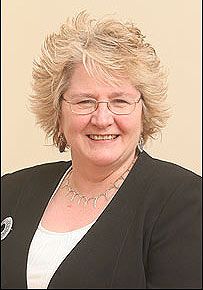
There is also a perception that the message from the government doesn't get through to local authorities. The Livability report accepts that transition is higher up the political agenda but highlights the one aspect of the problem:
'The key challenge for the government is to close the yawning gap between national policy aspirations and local implementation.'
The government has set about trying to personalise the agenda of care by introducing individual budgets. Roger Berry accepts that the government has identified the problem but that they may have been slow to act on it at a local level:
"In a sense we know what the problem is and we're a bit slow arriving at the best solution but on the other hand you do need to pilot things and that is happening, it's not as if nothing's happening, it's just that things happening, but in my view too slowly."
The problem for some is summed up by one contributor to the Livability report:
"Waving a care strategy at a Care Manager who wants to cut your package is not going to cut it."