Percentage of UK population per faith group*
Christian – 71.8
Muslim – 2.8
Hindu – 1
Sikh – 0.6
Jewish – 0.5
Buddhist – 0.3
Other religions – 0.3
No religion – 15
Not stated – 7.7
*according to Home Office statistics
Clash of cultures:
'Hyper honour mode'
leads to extreme reactions
Life in an alien environment can make people stick more strongly to their cultural traditions and go into "hyper honour mode", a Muslim journalist said.
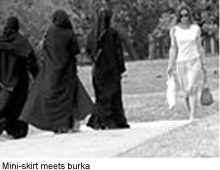
People become defensive and protective, when they leave their homes countries and feel their culture and identity is challenged,” explained Fareena Alam, editor of the Muslim magazine Q-News.
“When they feel threatened by the host society, they go into ‘hyper honour mode’ and make something a bigger problem than it is, something very extreme.
"It is an interested phenomenon that also second and third generations are taking part,” she added.
Living in two worlds
Free sexuality and the relative equality of the sexes may cause trouble in immigrant families, if second or third generation born girls claim “western” rights for themselves.
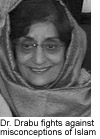 “It is hard for young Muslim girls to stick to their own culture,” said Dr. Reefat Drabu, chair of the social and family affairs committee of the Muslim Council of Britain.
“The life of many British girls seems fun and the group pressure implies it is cool to
do certain things.”
Diana Nammi, chair of the International Campaign against Honour Killing, said: "Especially for women in patriarchal families it is difficult to immigrate to Western countries, because they don't have any rights in their home countries.
"Living in the UK, they want to be entitled to the same rights as British women. So often this opposes their families' cultures which don't want them to adapt to the new environment."
“Women lose their lives because of very simple things: a kiss, having a boyfriend, wearing make-up, gossiping…” she added.
Forced marriage
In many cultures parents traditionally find suitable husbands for their daughters, as the latter are not supposed to have any premarital relationships – again a tough fact for girls who witness the lives of their British peers.
Some families believe a woman who opposes marrying a man they have chosen for her dishonours her family. The most extreme possible reaction would be to ban her or even kill her to re-establish the family's honour.
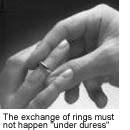 The Forced Marriage Unit, a joint effort by the Home Office and Foreign and Commonwealth Office, has defined forced marriage as
"where one or both parties are coerced into a marriage against their will and under duress. Duress includes both physical and emotional pressure.
"Forced marriage is an abuse of human rights and cannot be justified on any religious or cultural basis.”
The unit emphasizes the difference between forced and arranged marriage, a tradition which had operated within many communities for a long time.