| Sea Turtles in Danger |  |
 |
 |
 |
|
Home |  |
Facts | |
Conservation Issues | |
Volunteers | |
Public Awareness | |
News | |
Contact |
|
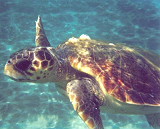
| | The loggerhead turtle at a glimpseScientific name: Caretta Caretta Age: More than 50 million years (contemporary of the dinosaurs) Class: Reptiles Physiology: Very large head (where their common name comes from), strong jaws, heart-shaped shell, two short front flippers with two claws and two rear flippers. Unlike the tortoises cannot withdraw their head in the shell. They have lungs and regularly come up on the surface to breathe. Maximum length: 90 -110 cm (appx) Maximum weight: 100 -180 kg (appx) Feeding habits: Mainly carnivorous and they eat snails, molluscs, crabs, sponges, seaweed Habitat: After hatchling, they live in the water where they mate, feed, migrate and hibernate. Females land only to nest Range: All oceans, primarily temperate waters Nesting season: Late June to August Major Nesting sites in Greece: Zakynthos island (Laganas bay), Peloponnesus and Crete Reproduction: After mating female sea turtles return to their birth beaches to lay their eggs. Nesting takes place at night. Each female nests 2-4 times per season and each nest contains from 80 to 120 eggs. Two months later the hatchlings will emerge and crawl towards the sea.Only 1 out of 1000 is going to reach the age of thirty (reproduction age) Need for protection: The loggerhead sea turtle (caretta caretta) is one of the seven living sea turtles species in the world today. According to the International Union for Conservation of Nature and Natural Resources the loggerhead turtle is classified as an endangered species (among other six sea turtles) since 1978. |
|
By Johan Chevalier
|