
In the middle of a chaotic press conference, the charismatic blonde held her own. Steely determination seeped through her demeanour as she faced up to a minister over a bureaucratic decision gone awry.
It’s been a little over a year since Joanna Lumley confronted Home minister Phil Woolas in an extraordinary live television confrontation.
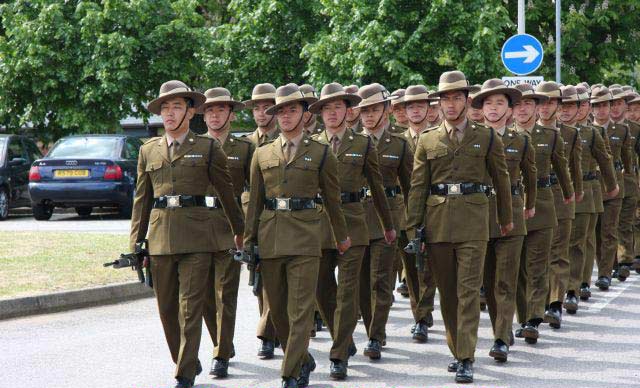
The Gurkhas benefitted massively when the ‘Absolutely Fabulous’ actress took up their cause and headed a widely supported campaign.
The fierce warriors from tiny Himalayan nation of Nepal won a landmark settlement case when the Labour government suffered an embarrassing defeat at the Commons. All Gurkhas who served in the army for four years or more now have a right to apply for settlement.
SO WHAT’S THE PROBLEM NOW?
The problem has in fact always been there. The Gurkhas have been fighting for equal pension rights for twenty years now. A revision of pension policy in 2007 put some soldiers at par with their British counterparts. However, some 25,139 Gurkhas were left wanting for more.
The Ministry of Defence refused to extend the gesture to veterans, citing the handover of Hong Kong in July 1997 as a reason.
One of them was Major Tikendra Dal Dewan. He enlisted in 6th Gurkha Rifles in 1971 and retired as a Major in 2002.
As the chairman of the British Gurkha Welfare Society (BGWS), he is currently embroiled in a legal battle with MoD over pensions. The organisation represents thousands of veterans who currently get only a fraction of pension their British counterparts get.
THE DEFENSE:
On 5 March 2010, the then Minister for Veterans at the MoD announced an increment of 11.3 per cent in pensions paid through the Gurkha Pension Scheme (GPS).
He said: “This increment is in line with inflation in Nepal. It has always been our policy to ensure that Gurkha pensioners are treated fairly. The Gurkha Pension Scheme currently costs some £55 million per year and will now rise to £62 million as a result of this uplift.”
Those veterans who have already moved to U.K. complain that rate of inflation in Nepal has nothing to do with their lives here.
Netra Limbu retired in 2000 as Staff Sergeant and speaks about the disparity.
SO IS IT UNFAIR?
Gurkhas retiring after 1997, were given the option of transferring to the Armed Forces Pension Scheme (AFPS) in 2007. However, the transfer was conducted on a 3 to 1 basis. So under AFPS, every 3 years served by a Gurkha is counted as 1 year.
Major Tikendra Dal Dewan’s 26 out 31 years of service falls under this scheme so he gets a third of what his British counterparts get.
Moreover, BGWS says that many veterans retiring before 1997 were denied the opportunity to transfer and are still on the Gurkha Pension Scheme (GPS). They were also not allowed to serve longer than 15 years and work towards a better pension.
STALEMATE:
The Gurkhas lost the high court test case battle in January this year.
They have appealed and will receive the decision on July 27, 2010.