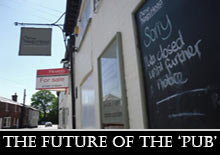



Pubs are an inescapable part of Britain. They will never 'disappear'. How many will continue to exist and in what capacity is entirely unpredictable.
 The Cherry Tree at Yaxley, which now runs a Post Office in the pub as well.
They are subject to pressures both economic and social - but how much can be done for them? Is the government doing enough for them? Are we as individuals doing enough to support those pubs we claim to love?
According to this investigation, there are three avenues that need to be pursued in order for pubs to survive:
Adaptation
Pubs will no longer exist in the guise they once did - the fondly remembered place where your grandfather had his first sip of mild bitter in a smokey room under the watchful gaze of the rest of the village men fresh off the field is gone.
But does this need replacing?
Drinking habits have changed in recent times, and people have fulfilled the holes in their lives that pubs one occupied, but that does not make it redundant.
These pubs will need to be multi-functional, according to Norwich CAMRA pub preservation officer Warren Wordsworth, with Post Offices and village shops possibly run out of the same building.
"If that could be done more then I really believe more village pubs could be saved."
The Pub is the Hub scheme, originally founded by the Prince of Wales, is designed to facilitate precisely this type of diversification, which it now operates in conjunction with local authorities, such as those in Suffolk.
It offers a way for pubs to adapt to the realities confronting them.
Regulation and legislation
But the onus should not solely be on the pubs to change, as Mid-Norfolk MP George Freeman agrees:
"There is more we can do in government to support these places.
"Public transport is terrible is rural communities, and with the stringent drink driving laws we have and could have in the future, we really need to improve this to help not just the pubs, but the villages as well."
Norwich North MP Chloe Smith highlights a different area:
"We should be giving pubs business rates of tax, because that's exactly what they are - businesses."
But the list of what government - central and local - could do to help pubs is long and optimistic.
Even with these concessions above, ideally pubs would need minimum prices for alcohol to make them more competitive with supermarkets, lower rates of duty on alcohol itself, tougher regulation of pubcos and lower rents from the companies themselves, as well as relaxtions in laws on music licenses and the smoking ban in particular.
Representation
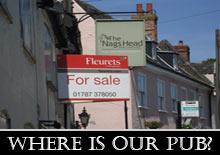
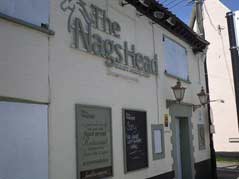 The Nags Head at East Harling.
But few of these changes will come unless the pub industry can represent itself better.
Chair of the Anglia branch of the British Insititute of Innkeeping Roger Cawdron said: "I think currently there's about 14 or 15 different bodies representing landlords and licensees in some capacity.
"What we need is one large group that will bring together all the factions to lobby government properly."
Whether this could bring real change in an industry in such danger remains to be seen.