

7th July 2010
Annoyed, by regular clothes washing and finding your items shrunk and threadbare? Then a self-cleaning clothes is definitely something to look out for.
 Invented by the U.S. military, the fabric originally intended to protect soldiers from biological attack. Researchers in Indiana, who worked on the miraculous fabrics, say they treat the textile by nano-technology based coating which potentially can kill deadly bacteria and also reduce environmental contamination caused by the use of destructive cleaners.
According to Jeff Owens, one of the scientists who participated in the research, most of the casualties on the frontier derive from bacterial infections, rather than accidents.
“We treated underwear for soldiers who tested them for several weeks and found they remained hygienic. They also helped clear up some skin complaints."
 The London based company, Alexium, is taking the formidable material to the next level, introducing the textile in production of civilian clothes, and claims a self-cleaning sports kits could appear in shops in a very short time. John Almond, a director of Alexium, said that apart from a sportswear, there are other applications like hospital bedding and nurses’ uniforms, that company is investigating.
According to the report by S. Parthiban from PSG College of Technology: “Structure based soil and water-repellent properties lead to an efficient use of materials and are therefore in agreement with the principles of sustainable development. The use of a self-cleaning coating is attractive as they are labour saving and effectively improve the appearance of the environment.”
Researchers say that the fabric resembles of wool and silk, and believe it won’t be long before the product will appear on the market.
23rd June 2010
A tax break campaign has been launched by the British Fashion Council (BFC) in a bid to instigate clothing businesses to work towards more sustainable way.
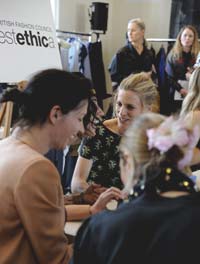 Following the debate on the promotion of ethical fashion and consumer engagement last month, Harold Tillman, the Chairman of BFC and the owner of Jaeger and Aquascutum brands, induced big companies to help implement the tax breaks to those who choose to be more ethical.
He commented: ” If UK citizens can get tax breaks on more energy efficient cars and other sustainable products, why can’t they wear their values with pride and get tax breaks on ethical fashion?”
Re:fashion summit also asked the three main parties running the Government to support tax breaks on sustainable clothing to improve the social and environmental impacts.
According to the debate’s report, topics discussed at the summit included proposal for support from government, partnerships and collaboration, sustainable products, and other tactics to promote the desirability of sustainable fashion.
The panel was formed by industry pundits like Yasmin Sewell – fashion retail expert, Baroness Lola Young - formerly Head of Culture at the Greater London Authority and Charty Durrant- the former fashion editor of the Sunday Times. Yasmin Sewell concluded that products must be able to stand up against the broader industry, but in order to do so the businesses must become more competitive and marketed in a way that ethical fashion is a lifestyle choice.
Government support will keep ethical fashion on the consumer’s agenda, will assist in competitive pricing and will help the growth of more ethical fashion businesses.
Links:
http://www.britishfashioncouncil.com/
16th June 2010
Stepping into i-phones shoes can be a bad idea.
If you really like you iphone and other “i” gadgets, and thinking of wrapping yourself into into similar wear, then you may consider getting yourself a neoprene bikini from Lisa Marie Fernandez’s newly released collection.
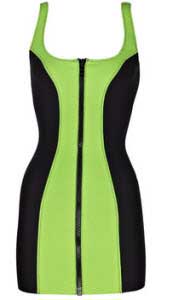
Despite its disguising name, neoprene’s main ingredient is a plain rubber, which gives its textile a rather spongy and elastic sensory feeling, at the same time reminding very much of a wetsuit.
Due to its main component, neoprene has rarely been used for any other purposes than production of car tyres and marine divers’ costumes. But according to Dr. Joel DeKoven direct contact with this material can trigger a so-called latex allergy, causing severe dermatological problems.
“The chemical accelerators used to manufacture neoprene rubber are potent sensitizers for allergic contact dermatitis and often accompany the material in commonly used products,” said dr DeKoven at the annual meeting of the Canadian Dermatology Association.
But on release of her collection in America, Lisa Marie Fernandez spoke merely of luxury neoprene’s sensory qualities, leaving general public to wander about its health and safety assessment. She said: “My idea took a year to develop as it's so hard to construct, but ours is so different to wetsuits — it's soft, feels light on and it's so versatile.”
Share
--------------------------------------------------------------------------------------------------
9th June 2010
It is D-day for fashion students, as the Graduate Fashion Show has started in London to show what they are really made of.
Although textiles often play a secondary role when it comes to first impressions, this year the GFS has proven it otherwise.
A combination of prêt-a-porter and fascinating simplicity is dominating in the collections. Such a yielding-to-customer approach and a miss out on an absurd extremism, made students push their limits in use of textiles. Straps of latex and neoprene; clews of wool and mohair; and seductively flattering chiffons were second to none in highlighting ingenuity of silhouettes.
Gemma Smith, one of the newly emerging designers, said: “Fabrics are paramount when creating a design.” Her “Worn Out ethically” sandy-shaded collection is entirely made of organic materials.
 “I use linen and cotton a lot, as well as soy bean jersey which is surprisingly yielding and flowing. My collection is only about natural fibres and natural dyes.”
On the catwalk, Liam Stafford, from Kingston University, presented mini-structured mohair dresses. David Stoneman from the same institution released knitted overalls for men, creating a sense of artful negligence rather than slovenliness. He also used print and knitted patterns to create protruding creatures on one of his jumpers.
The theme of recycling also appeared on the catwalk, with seductive bodies skilfully quilted-together from the old t-shirts, by Tasha Shore.
The prominent use of natural yarns has been spotted since the Summer 2009 as the trendy palette has been shifting from pastel to sorbet, and eventually just ‘bleaching’ into various shades of basic white, grey and sand colours.
GFS is currently taking place in Earls Court 2, London, and will last until 10 June 2010.Share