Introduction
What is Haemophilia?
The word haemophilia originates from the Greek term haemo or hamia, for blood and philia which means friendship, or affinity. It is a genetic disorder that carries through the X-chromosome and transfers through the females, but almost always manifests itself in males. Haemophilia was discovered by Dr. John Conrad Otto in 1803, when he discovered a: “hemorrhagic disposition existing in certain families.”
There are various types of the disorder, from haemophilia A or 'classical' haemophilia where sufferers are deficient in the clotting agent Factor VIII. Haemophilia B or 'Christmas disease' effects people who are deficient in Factor IX. Haemophilia C is a milder form of the disorder and affects 1 in 100,000, and does not lead to bleeding into the joints as with A and B.
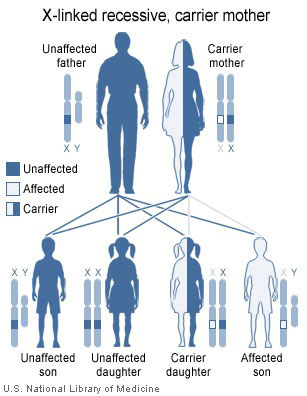
Image courtesy of US National Institute of Health
According to the UK Haemophilia Society website, there is contention over whether or not women can have haemophilia, “the levels of many women who carry haemophilia are low enough that they would be considered to have haemophilia if they were a man. For that reason we tend to say that while the textbooks might say that only men can have haemophilia we believe that if a women wants to describe herself as having haemophilia then she does.”
What is contaminated blood?
The term contaminated blood describes a series of events throughout the 1970s and 1980s that resulted in thousands of haemophiliacs around the world being infected with various diseases ranging from different forms of hepatitis, to HIV to vCJD, the human form of “mad cow disease”.Famous haemophiliacs
Queen Victoria famously
Tsarovich Alexei Nikolaevich suffered from haemophilia B and was treated by the mystic, 'mad monk' Grigori Rasputin.
Mother Teresa is rumoured to have suffered from mild haemophilia
The Arkansas Prison Blood Scandal, an American prison medical administrator John Byus claims that the FDA regulations of blood only spanned “recommendations” but that when accusations that their prison blood farming caused the epidemic, “nothing has been proven”.
In the 1970s and 1980s when there were blood shortages in the UK that were needed in order to use blood plasma to make the emerging haemophilia treatments Factor VIII and Factor IX, the NHS imported this commercial, unscreened American blood.
Thus over 4,800 British haemophiliacs were given these various diseases.
In 2006, an independent inquiry was set up by Lord Archer of Sandwell, and in 2009 it concluded that the NHS and Department of Health made serious mistakes when importing American blood products and treating American patients.
Lord Archer recommended that the government review its compensation programme to victims of contaminated blood, and that it re-evaluate its evaluation that the Irish government was flawed when it compensated its contaminated blood haemophiliacs.


WEEKLY NEWS
Cameron backs Skipton Fund review
7.7.10
Contaminated blood film to denounce Factor VIII
30.6.10
Protest comes as FDA imposes blood fine
23.6.10
Government backs down on judicial review
16.6.10