Muslim Integration in the UK
Muslims in the UK: Integration or Co-existance
08/06/2009
15/06/09
22/06/09
Video: Misunderstanding of Islam
30/06/09
Muslims and politics: more engagement is essential
28/06/09
30/06/09
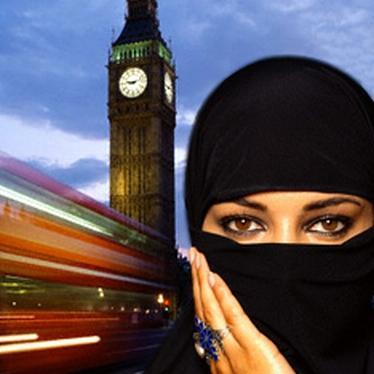
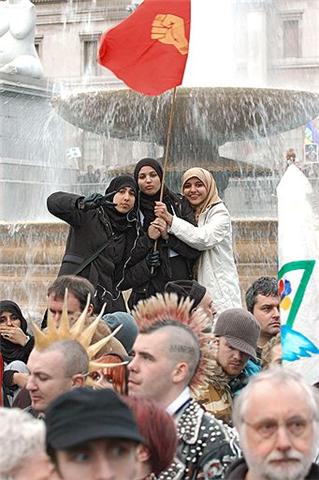
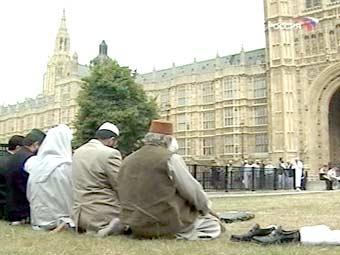
Muslims in the UK: integration or co-existance?
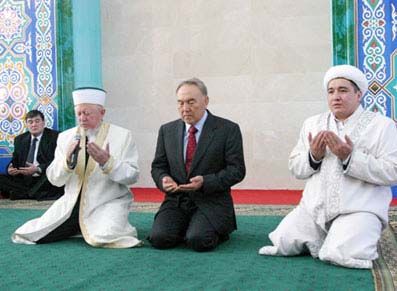
More than eight out of 10 Muslims said they were loyal to the UK, but only 36 per cent of the general public considered people of Islamic belief to be really attached to Britain, according to the latest Gallup Coexist Index 2009. However, Gallup results and the integration itself have differerent interpretations among Islamic organisations.
The Muslim population in the UK has grown to 2.4 million and multiplied 10 times faster than the rest of society during the last four years, research by the Office for National Statistics reveals.
In British society the Muslims - in spite of the prevalence of Islamophobia - are the most loyal both to their religion and country compared to the rest of Europe.
Muslims living in London polled by Gallup believe that in order to integrate successfully into British society citizens should speak the language, work, be educated, participate and engage in politics, volunteer and celebrate national holidays.
Executive director of the Gallup Centre for Muslim Studies, Dalia Mogahed said that “…the research shows that many of the assumptions about Muslims and integration couldn't be more wide of the mark. Muslims want to contribute to society."
Head of Policy and PR for the Muslim Association in Britain and Vice-Chief of Mosques and Imams advisory board, Said Ferjani, said, “We want to promote the concepts of coexistence and respect for each other and we want to de-fuse the tensions between the different communities within the context of the war on terror and clash of civilisation so that we contribute to the world's peace. When it comes to our community in Britain, we don’t feel the belief in our values contradicts living within a non-Muslim society, look at the last Gallup results.” However, he emphasised that the British way of living is not ideal and participating in society should be within the context of practising Islam. Muslim minority in the UK should not set up absurd goals to establish arabic state in the UK, as for example, Isamic radicals from Hizb Ut Tahrir party promote. "Islam teaches to respect your neigboors and their beliefs. Parnership, understanding and respect are the best answers to the blind integration," Mr. Ferjni added.
Mr Ferjani added that it is important to dispel the common misconceptions about the Islamic faith in order to answer critics of Islam.
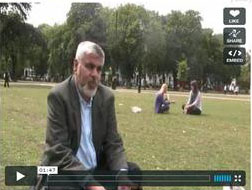
[Said Ferjani about Integration]
Rony Miah, a member of the committee of the Council of ex-Muslims said there is no such an issue as Muslim integration in the UK; it is political elements used in religion. “15-20 years ago when Pakistani and Bangladeshi children were the worst performers at school the real reason was that their rural background, and their parents were uneducated. The issue was about Asians - Indians, Pakistani and Bangladeshi. All of the sudden it became about Muslims, but issue is not about Islam; it is about education and economic level, it more to do with demographic and socio economics. Instead of describing them as Indians, Pakistani or Bangladeshi we started describing them as they were Muslims,” he said.HIzb Ut Tahrir, the Radical Muslim Liberalization Party, has an alternative point of view on Muslim integration in Britain. The party stands for re-establishment of the Muslim Caliphate in the Muslim World, based on Sharia Law. Hizb ut-Tahrir is banned in Libya, Iraq, Egypt, Uzbekistan, and General and Pakistan. Their political activism is considered as a terroristic movement.
Hizb ut Tahrir’s media representative,Taji Mustafa, says, “In the UK, we believe that Muslims should interact with others on an Islamic basis. We believe that the Muslim community with its Islamic values and culture can contribute in solving many of the social problems affecting Western society - such as racism, alcohol abuse, substance misuse and the decline in morality.”