






Leprosy sanatoriums in Japan
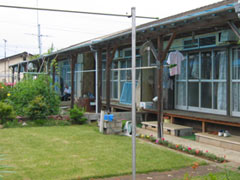 |
| Single-storey houses in the sanatorium. |
|---|
| Source:Yu Shang-Ju |
The Japanese government not only built up leprosy sanatoriums in its colony but also within Japan. The Leprosy Prevention Law was put into force in 1907 and abolished in 1996. Leprosy patients were isolated from society according to the law for 88 years. There are now around three thousand recovered patients staying in 15 leprosy sanatoriums across the country.
Professor Feng Yen-Chiou from National Taiwan Normal University visited Aiseien National Sanatorium in Nagashima in 2004. She was impressed by the consideration taken to care for the patients. “All the pavements have canopies to protect them from rain. There is even a broadcasting system set for the blind,” she recalled. She was also pleasantly surprised that modern medical facilities can be put in old buildings. “Most buildings remain single-storey. The purpose is to make the patients feel like they are at home, rather than in a hospital.”
A medical student Yu Shang-Ju visited National Tama Zenshoen Sanatorium in Tokyo last year. Although most buildings have been rebuilt, he was amazed at the efforts that the management had made to preserve the history of the place. “I saw memorials everywhere. ‘Disappeared historic site’ is written on the memorials, which shows that people regret not keeping enough about the past.” In 1993, a museum of Han-Sen Disease (leprosy) opened next to the sanatorium to promote public understanding of leprosy. “They also keep a field of trees called ‘woods of human rights’ to provide a space for reflection, “said Yu Shang-Ju.
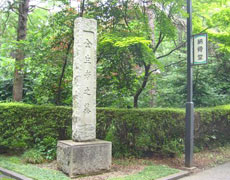 |
A stone in memory of the dead patients. |
|---|
Source:Yu Shang-Ju |
Leprosy patients in Japan are familiar with protests. In 1987, patients from Aiseien battled against the government’s decision to build a barrier on a bridge which connects Nagashima and the mainland. Patients from Tama Zenshoen once stopped a terminal construction plan on the site of the sanatorium. In 1998, patients from all over the nation united to file a case against the government for its infringement of human rights. They won the case in 2001 and gained compensation of 18 hundred million Japanese dollars.
Related story :
Click to visit another well-preserved sanatorium in Hawaii !!