


Education:
A Brave New Curriculum
Recent proposals made by the government to teach atheism in schools could be seen as a sign of progress. With only 7% of people going to church each week according to a BBC poll, a fresh curriculum for a nation disinterested in religion may seem a sensible move.
If the plans went ahead, atheism, as well as other secular beliefs like agnosticism and humanism would be taught alongside old favourites such as Christianity and Islam, in a rebranded 'RE' called Religious, Philosophical and Moral Education.
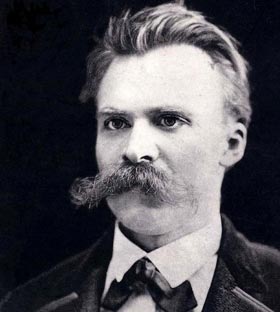
Atheist philosophers like Friedrich Nietzsche could
be taught in schools
But is this a step forward or just the desperate flogging of a dead horse?
A spokesperson for the Qualifications and Curriculum Authority, which regulates what is taught in schools explained the reasoning behind the plans:
"It is very much the intention that young people in the context of religious education should be studying non-religious beliefs. There are many children in England who have no religious affiliation and their beliefs and ideas, whatever they are, should be taken very seriously."
To many, this may seem like good news. Graham Ward, a humanist efficient who conducts funeral services in south-east England said the proposal was "a great idea", adding: "The biggest problem my colleagues and I face is a lack of awareness of what we do.
"Many people assume that funerals have to be carried out in a certain way, or they assume they have to be religious affairs. They are often surprised and above all pleased to discover that there's another way."
But while increasing awareness of philosophies like humanism is arguably a worthy undertaking, the objective stated by the QCA was to increase the relevance of religious education to today's schoolchildren... So do non-religious boys and girls across the country feel unrepresented? Are they crying out for Nietzsche and Satre to share the limelight with Jesus and Mohammed?
Some may well be, but it seems premature to assume that purely because a person does not believe in a higher power, that they care as much about philosophy as their religious peers do God.
Columnist Patrick West, who regularly comments on religious topics, addresses this issue in his piece I'm No Atheist, I'm A Rationalist, saying that the plans "give succour to the erroneous notion that atheism is 'just another religion'.
"To say non-belief is 'just like any other religion' is the same as saying that not supporting a football team is 'just like supporting another football team'. Non-theists have simply opted out of the system."
If this logic is to be followed, all those children that have 'opted out' are unlikely to be impressed that their absence of faith is to have a label stuck on it and be shunted in alongside all the religions they they have chosen to distance themselves from.
So why not scrap religious education altogether? If the QCA is so keen on keeping things relevant, then why not take heed of all the atheists and agnostics that have 'opted out'?
Faith schools retain too much power for such a move, for without any legislative change, reforms from the QCA can only serve as guidelines. As for the remainder, the government's enthusiasm for multi-culturalism ensures that religious education remains on the curriculum.