Feature: Airbrushing - a new art?
When the fashion houses are launching a new campaign or the high-priced glossies are planning an A-list photo shoot they call one man for absolute perfection: Pascal Dangin.
Dangin has made a lucrative career and built a unique reputation as the airbrusher. His tool is a computer mouse rather than a brush and easel but Dangin's skill is so fine that some are calling it art. He has been used by the likes of Vanity Fair, Prada, Harper's Bazaar and Louis Vuitton for years but Dangin's identity has recently been thrust into the limelight.
In May The New Yorker magazine published an article on Dangin in which he confessed to being hired for a Dove 'Real Beauty' campaign: "Do you know how much retouching was on that?" he said. "But it was great to do, a challenge, to keep everyone's skin and faces showing the mileage but not looking unattractive." The repercussions were global and Dove was labeled a hypocrite. The controversy was taken seriously and the company responded with a lengthy statement saying that 'Dove's mission is to make more women feel beautiful every day by widening the definition of beauty' and that 'the women's bodies (in the campaign) were not digitally altered'. The usually reclusive Dangin also made a statement saying that "the New Yorker incorrectly implies that I retouched the images in connection with the Dove 'real women' ad. I was directed only to remove dust and do color correction - both the integrity of the photographs and the women's natural beauty were maintained."
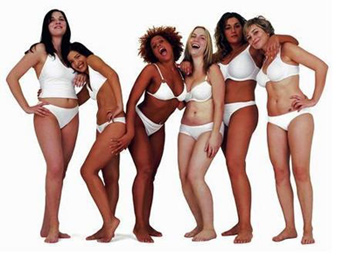 A Dove 'Real Beauty' campaign
With the controversy of Dove, Dangin's profession and details of his high demand became clear. Perfecting the digital has earnt Dangin a living since 1993 and he is easily at the top of his game: a reputation as the number one retoucher for fashion photographs and charging £10,000 for working on one magazine cover. He drives an Aston Martin, owns two homes in New York and has a property in St. Bart's. Britain's fashion bible 'The Face' recognised Dangin in their annual 'power list': 'No. 17 Pascal Dangin - acknowledged master of digitally retouching pictures' sandwiching him in a who's who of couture. In demand by Madonna and Jennifer Lopez, renowned photographer Annie Leibovitz regularly requests Dangin and has admitted, "Just by the fact that he works with you, you think you're good."
But what does the man himself think about his work? "I look at life as retouching.Makeup, clothes are just a transformation of what you want to look like.basically we're selling a product - we're selling an image. To those who say too much retouching, I say you are bogus. This is the world that we're living in. Everything is glorified." Although he sees digital manipulation in this matter of fact way he admits his clients are a little more sensitive: "I never want to talk about my work, because it's kind of taboo. The people who benefit from my work do not benefit from me talking about it."
When it comes to manipulating images it always boils down to how much is too much? Whilst Dangin has, on occasion, matched someone's head with another person's body he will always strive for natural looking perfection. In a Lanvin campaign Dangin created the background with buildings from Las Vegas, Shanghai and Amsterdam. But this artist is known for his restraint, his retouching is done with subtlety and you won't see a plastic looking doll on any of Dangin's campaigns: "I think retouching is too much when it reaches the point of disfiguring." He won't drastically change a picture of a well-known actor or celebrity because people are aware of what they look like: skin may be smoothed and tightened and the colours brightened but there won't be much change: tattoos remain; scars stick and wonky teeth stay wonky.
But is Dangin partly to blame for the apparent obsession with airbrushing? Not so according to him: "I'm just giving the supply to the demand." And the demand is certainly high: in this year's March issue of Vogue Dangin worked on 144 images (107 advertisements, 36 fashion pictures and the cover).
If you are hoping to see the transformation of a Pascal Dangin airbrush you'll be disappointed to learn that the originals are strictly off limits: "You are never going to see them", he has said. "It's an ethic, a respect for the privacy of the photographer. If someone has decided (to have) retouching, it means they don't want other people to see it the way it was. This is like patient confidentiality. I feel very strongly about it." Freelance retoucher Jill Wooster has said that "if people are going to Dangin, it's because of a specific style that is his, so you have to think of him like a painter.photographers get a lot of credit for not doing very much. It's always the retoucher who makes the difference."
Dangin takes his work seriously as a form of art: he will not work with just anyone; a photographer asking for Dangin's assistance must have a clear vision or story of what they want to capture. Artists he employs must take classes in anatomy and figure drawing. Prospective hires are asked to answer 56 questions on art history and computer technology. But what makes Dangin an artist? "He understands the intention of the photographer, the story of the magazine. Pascal's artistry is rare", says the Creative Director of W magazine.
Dangin sees his work as art, which may be why he doesn't recognize the controversy or the danger in perceiving beauty in this way: "I'm not sure readers care that something is retouched. It's about seeing this beautiful thing, about this presentation of perfection".
It is fair to say that Dangin lives a very comfortable life through his success in retouching, and at the moment his business is booming. Pascal Dangin may not design the clothes or wear them down a catwalk but the former hairdresser is one of the most powerful men in fashion.
Picture credit: Dove
Source: New Yorker, boxstudios.com
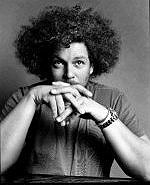 "Give me a picture of you and I'll make you look like you've been in the gym for months" - Pascal Dangin