A Body Issue
American university Bryn Mawr takes positive body image so seriously it set up it's own Body Image Council (BIC). Council psychologist Shobi Kanal weighs up how much the media is linked to eating disorders and negative body issues.
Q: How much do you feel magazine pictures and advertisements effect young people's body images issues?
A: I have met the occasional student who talks of wanting a body more like that of a fashion model. However, a greater number of my students with body image problems cite family and peer influences as sources of their self-discomfort. This doesn't necessarily mean that media images aren't influential; such influence may be more unconscious. We're not always aware of where our assumptions of what's normal or desirable may be coming from.
Q: In your experience how aware are people about the process that a picture goes through to give the appearance of a 'perfect' body?
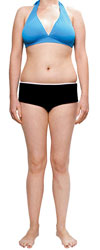 A: In a class I taught for freshmen this year on body image and eating disorders, I showed the "Dove Evolution" film. People did not seem surprised at the content; probably a number of them have used Photoshop and similar programs themselves. I'm older myself (47) so when I learned about airbrushing and other manipulation of photos it really was news to me that the people I was seeing in magazines didn't really look like that. There may be a generational difference in awareness of picture manipulation.
Q: Is airbrushing something that the Body Image Council actively educates people about?
A: In 2007 Tom and Doris Smeltzer came to campus to give their presentation entitled "Andrea's Voice." Andrea was their daughter, who died at age 19 from bulimia. This is a very powerful presentation; during one segment, the Smeltzers show examples of misleading media images that have been airbrushed and otherwise doctored. In 2004 Jean Kilbourne, an award-winning speaker and author of the documentary film "Killing Us Softly," which is about media images of women. Her presentation for BIC was entitled Slim Hopes: Advertising, Relationships & the Obsession with Thinness.
Q: What does the BIC teach about the perceived body images in the media?
A: BIC seeks to educate our college students about how media images are created and discourage unrealistic expectations. Each February, during Eating Disorders Awareness month, BIC holds a Jeans Drive: Don't fight your genes, just change your jeans! Our message is that each of us should accept and embrace our body type and focus on healthy living.
Q: What are your thoughts on a possible 'ban' on airbrushing in British magazines?
A: I'm a real believer in freedom of speech (and) I am personally uncomfortable with an outright ban on particular kinds of images. However, I'd love to see more images of real people in magazines. A ban on airbrushing itself would, I think, be hard to enforce. A colleague of mine once jokingly suggested that manipulated images should bear a disclaimer, similar to the U.S. Surgeon General's warning on cigarette boxes: "WARNING: This image has been manipulated. Actual photo subjects larger and fleshier than they appear. Believing that this photo is real could be damaging to your health."
The Bryn Mawr Body Image Council
The Body Image Council (BIC) was founded in 2000 after two students who had suffered with eating disorders expressed the need for such a facility. The mission of the Bryn Mawr College Body Image Council 'is to advocate and support the growth and development of healthy body images and attitudes among all the members of the College community.' Shobhi facilitates a support group at Bryn Mawr College for people struggling with body image problems and/or eating disorders.