Teenage girls and a Photoshopped world
A retoucher may blame eating disorders on a problem with society but a psychotherapist may blame that problem on the media's choice of images. Is there a right answer?
Whatever the answer one thing that is agreed is that when it comes to body image the most 'vulnerable' are young females.
In 2007 a survey by Girlguiding UK found that seven year-old girls were already worried about their figures, thinking the slimmer they were the more popular they'd be. As a result the report suggested that media companies fund lessons in schools to show how images are manipulated in magazines.
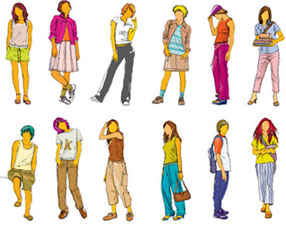
Another survey, this time by Dove, found that 77 per cent of 11 to 14-year-olds feel "fat, ugly and depressed" when they see images of celebrities and models. Some children were asked to keep a diary, one 14 year old wrote: "The images I see in magazines make me feel sad because I know I could never be that beautiful." Dr. Susie Orbach, a member of the Dove Self-Esteem Fund Advisory Board, says that "young girls are bombarded by millions of images of digitally manipulated, airbrushed beauty every day and research tells us that this onslaught can often be responsible for feelings of low self-esteem."
The Centre for Eating Disorders at Sheppard Pratt has said that 'Photoshopping creates a false sense of perfection. It's time the media stopped setting unattainable standards and making readers feel like they don't measure up.'
With so many young people having a social networking account advertising is rife. Facebook adverts have taken on a particular theme recently: improving your body. 'Be skinny for summer' is what the Pink Patch promises both men and women, unavoidable down the left hand side of the website. Harley Group offer hair removal treatments and the MYA (Make Yourself Amazing) cosmetic surgery company use a former Big Brother housemate to sell their bust enhancing surgery. Seven out of every ten advertisements are along this line.
Places specifically for teenagers could be some of the most powerful when it comes to negative body issues. Bliss, a teen magazine, had a "How Sexy Am I?" poll on their website, which asked girls to rate their own bodies with answers ranging from 'beautiful' to 'ewww.' The section was subsequently taken down. The site also had an "Airbrush Me" application that gave girl's photographs 'a celebrity makeover' by taking away spots and discolorations. Whether this is damaging or in fact educational on the effects of retouching remains to be seen.
Click here to watch what some young girls think of retouching
Alesha Dixon 'Look But Don't Touch' BBC3
 Singer and Stricly Come Dancing winner Alesha Dixon attempted to get a magazine to put her on their cover without being retouched, for a BBC programme. The point was to educate people and investigate the process pictures go through.
Alesha said that people feel 'pressure to look that way' and are 'bombarded with flawless images'.'I understand magazines have to make an image stand out but it does create a lot of pressure for women', she said.
A focus was to see what six and seven year olds think of media images and boost awareness of retouching. In the programme an eight year old thought her teeth weren't white enough and another already thought the ideal dress size is an eight.