|
 |
 |
 |
 |
 |
 |
 |
The government seizes only 20% of the supply of illegal drugs coming into the UK, says a report by the Strategy Unit led by former director general of the BBC Lord Birt.
The report also stated that for the government to successfully impact levels of illicit drug availability in the country, it would have to increase levels of seizures to 60-80%. However, the UK Drug Policy Commission has expressed reservations and believes that there is no concrete evidence to prove that higher seizure rates would successfully reduce the harms caused by drug abuse.
Guardian and Sunday Times columnist Simon Jenkins believes that the government has failed miserably at trying to control demand and is now "persecuting countries like Peru, Afghanistan and Columbia" in an attempt to curb the illegal supply of drugs to the UK.
The government has been operating under the assumption that if they are able to curb supply, it will automatically lead to lesser availability and a greater price of the drug. This will reduce the harm caused by drug abuse. However, Director of Transform Danny Kushlick thinks otherwise:
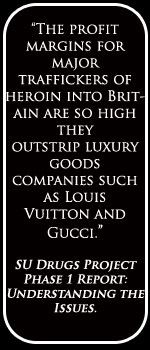
Government intervention is seen to be more a "cost of business than a substantive threat" says the SU report. A recent Times editorial stated: "The barons' grip does not seem to have been shaken by record hauls of illicit substances." Seizing or preventing supplies of drugs in the UK has shown that there is more meddling and adulterating of drugs but no real impact on its distribution.
Critics of government policy believe that there is significant scope for the authorities to intervene effectively at other stages (such as treating addiction both in and outside of prison) and thereby reduce the harm caused by drug addiction.
The report concluded: "Despite interventions at every point in the supply chain, cocaine and heroin consumption has been rising, prices falling and drugs have continued to reach users."
 |
 |