|
 |
 |
 |
 |
 |
 |
 |
| Frequently Asked Questions |
How are illegal drugs classified in the UK?
Illegal substances are classified according to the ABC system.
The ABC classification system “was designed to make it possible to control particular drugs according to their comparative harmfulness either to individuals or to society at large when they were misused” ("Drugs Classification: Making a Hash of it?").
Type |
Substance |
Maximum Penalty |
Class A |
Amphetamines prepared for injection, Cannabinol cocaine, coca leaf, crack, dicanol, ecstasy, heroin, LSD, Psilocybin mushrooms, mescalin, methadone, methamphetamine, morphine, opium, PCP, pethadine, poppy straw, STP. |
Possession: Up to 7 years imprisonment and/or an unlimited fine Dealing: Up to life in prison and/or an unlimited fine |
Class B |
Amphetamines, codeine in concentrations above 2.5%, DF118, ritalin and barbiturates
|
Possession: Up to 5 years imprisonment and/or an unlimited fine Dealing: Up to 14 years imprisonment and/or an unlimited fine |
Class C |
Cannabis |
Possession: Up to 2 years imprisonment and/or an unlimited fine Dealing: Up to 14 years imprisonment and/or an unlimited fine |
How is the ABC system of classification determined?
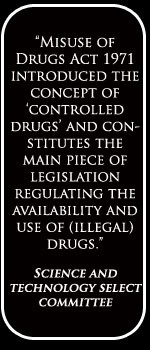
The Misuse of Drugs Act 1971 forms the basis of all UK drug legislation. The UK government’s new policy on drugs came into action in 1998. It will be reviewed in 2008. Leading up to this appraisal of current UK drug legislation, many people are questioning the effectiveness of the MDA to deal with problematic drug use. The main criticism has centred around the fact that while the Act clearly lays out the punishment associated with each type of drug, it does not give an honest account of harm or the effect of each drug.
What types of drugs are abused in the UK?
The 7 most commonly abused substances in the UK are:
- Heroin
- Crack
- Cocaine
- Amphetamines
- Ecstasy
- Cannabis
- LSD
 |