Home | Latest News | Links | Contact
Cabinet shuffles in the young
Friday, July 6, 2007
The number of young MPs in Parliament's Cabinet and Shadow Cabinet have increased with the recent shuffle in the House of Commons.
Traditionally known for its saturation of middle-aged men, Cabinet has been rejuvenated with  younger blood in a shuffle that has created one of the youngest Cabinets in history bringing in many 30-something fresh faced MPs.
Gordon Brown is promoting younger talent to contrast the administration of his predecessor Tony Blair and David Cameron followed suit by harnessing “new talent within the party" as he prepares for the next General Election.
Gordon Brown has appointed David Miliband, 41, as Foreign Secretary and David Cameron has included in his Shadow Cabinet the youngest female Conservative MP Justine Greening, 38, and the first black Conservative MP Adam Afriyie, 41.
Conservative backbencher Ann Winterton commented that David Cameron’s cabinet shuffle has "left much of the party's traditional support baffled."
She provided a warning that the largest group who will vote at the next general election are “those with grey hair" and to remember "it is vital that they are not neglected as the policies are formulated.”
Youth ‘let down’ by older generation
Friday, June 29, 2007
Young people in England are increasingly feeling let down and isolated from the older generation.
This was announced by Young People’s Minister Parmjit Dhanda during opening remarks at the first 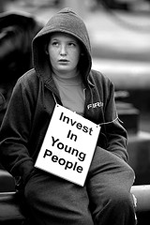 annual Youth Summit taking place in London this week. This two-day event gathered Government Ministers, senior officials, policy makers and 100 young people.
After a month of meeting with groups of young people, Parmjit Dhanda, Parliamentary Under-Secretary, Department of Education and Skills said: “Despite all the negative stereotypes, young people in this country are switched on, getting involved and achieving. It’s time we started recognising that. Give young people opportunities and they will exceed your expectations. Ignore them, dismiss them, treat them as second class citizens and yes, they may not turn out to be exemplary citizens.”
There are three key areas that require attention according to MP Parmjit Dhanda. Young people feel misrepresented by both the media and older generations. Young people in general would rather have positive things to do than ‘hang out on street corners’ or be involved in anti-social behaviour. And, facilities for young people need to reflect the changing world. Traditional youth centres are often not enough.
Electoral reform society Scottish youth and campaigns David Orr comments on the treatment of young people by politicians.
Listen!
Report slams e-voting and e-counting
Friday, June 22, 2007
A report released recently by the Open Rights Group (ORG) announced “the problems observed at the English and Scottish elections in May 2007 raise serious concerns regarding the suitability of e-voting and e-counting technologies for statutory elections.” The report said: “there were numerous problems 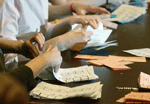 with electronic voting” and “chaotic scenes were observed at the English e-counting pilots."
In Scotland, there were over 140,000 spoiled ballots. Campaign coordinator Jason Kitcat of the ORG said: “I think our findings confirm that e-voting and e-counting are not ready for this.”
To encourage young people to participate in politics and to vote, Andy Hamflett, chief executive of UK youth parliament said: “Voting has to catch up with the technology that is there. Young people use their mobile phones, they use e-mail all the time and we’ve got to be able to do that.”
The Electoral Commission’s detailed independent review of the election is due to be released in August. Nina Ziaullah, head of campaigns and public information at the Electoral Commission said: “I will not be able to prejudge the outcomes of the full independent review.”
Government asks young people to 'Voice It'!
Friday, June 15, 2007
A radio pilot project that started with kids on the edge of exclusion in Leeds is now being backed by government funding for up to 30 schools around the UK to promote active citizenship among young people.
Lucy Neale, project manager of Radiowaves ‘Voice It’ said: “The idea was to see if radio as a medium would help engage these young people.
 “Through this we are encouraging young people to produce podcasts about issues that are important to them in their school, in their local community and nationally.”
The Hertswood school in Borehamwood had a dozen students of different year groups take part in the pilot radio project last April.
James Wood, Hertswood assistant head teacher said: “I don’t think they were ever aware they were doing politics. They were just reporting what they found out and putting their thoughts to a few people.”
Ms Neale said: Students “didn’t feel they had a voice or what they said was going to be listened to, that’s why they didn’t bother. By giving them the radio station, it gave them a vehicle to speak to people they wouldn’t normally speak to.”
Since the announcement of this project by the Ministry of Justice on June 7, 2007, the response has been “Fantastic!” according to Ms Neale. “We have already over 30 schools sign up."