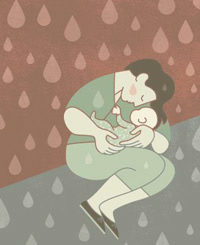
In discussing the dark side of motherhood it is impossible to escape the issue of post-natal illness.
Affected women find that their experience of early motherhood differs dramatically from the ideal they hoped for.
Government figures show that 1 in 10 women will suffer some form of post-natal illness after giving birth. Research conducted by other organisations put the figure nearer 1 in 7. What is clear is that post-natal illness will, to varying degrees, affect a significant number of women.
Those involved in offering support and resources for mothers affected have long campaigned to increase public awareness of the issue. But how successful do they feel they have been?
The National Institute for Clinical Excellence issued new guidelines in April 2007 aimed at ensuring that medical practitioners are able to identify those women who may need support.
According to the leaflet provided for patients by the organisation you should be asked the following questions when you first see someone about your pregnancy, when you first see a midwife, and usually 4–6 weeks and 3–4 months after you have given birth.
1. During the past month, have you often been bothered by feeling down, depressed or hopeless?
2. During the past month, have you often been bothered by having little interest or pleasure in doing things?
3. Is this something you feel you need or want help with?
But although there is clearly more awareness of the problem, not all the information seems to have gotten through to the public.
For example, according to PNI campaigner Veritee Reed Hall, medical professionals and those closely involved in post-natal illness information, tend not to describe the condition as post-natal depression. This is because although depression describes what some women feel, it does not encompass all possible symptoms. Some women will find they experience mania as a result of post-natal illness, and in an attempt to be seen to be coping come across as upbeat and positive. The Association of Post Natal Illness also explain on their site that they avoid using the term post-natal depression, despite the fact that it is still the most common terminology within the media and amongst the general public.
There is no one theory on the cause of post-natal illness. The mental health charity MIND name a variety of factors which can contribute to a woman falling ill after having children. These can include a difficult pregnancy or labour, changed relationships, a lack of support, childhood experiences and hormonal upheavals. And this list is in no way exhaustive.
The variety of contributory factors means that a standard treatment is impossible. Anti-depressants and counselling are the main methods for tackling post-natal illness, but their effectiveness will differ from woman to woman.