




Food for thought
Emissions from food account for between 17 and 32% of total UK CO2 output.
It is difficult to pin down a single figure because of variations in calculation methods. But clearly it is important to consider all stages of the food chain from field to fork, production to plate. The flow chart below illustrates all the different stages.
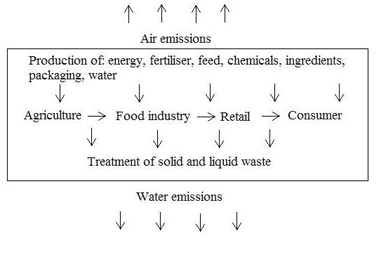
The chart below illustrates the make up of the CO2 emissions in the UK. Consumers have limited power to change the agricultural methods used to produce their food. But they have the potential to make big changes by voting with their money and making carbon friendly choices. Choosing products which are not refrigerated, buying local and in season produce and reducing food waste can all have a big impact on the emissions produced from the food we consume.
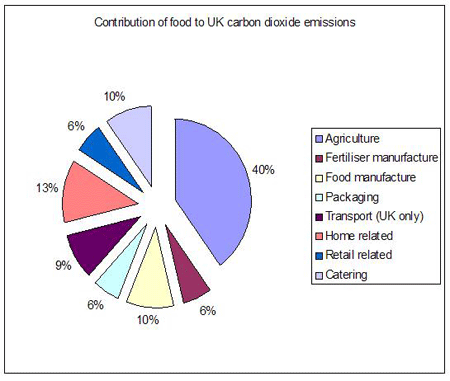
Source: The Food Climate Research Network
Meat and dairy
The production and distribution of meat and dairy amounts for as much as 50% of total food emissions. This is because the rearing animals for meat, milk and eggs is incredibly energy intensive. However, meat provides us with valuable nutrition and useful by products like leather, petfood and manure.
The Food Climate Research Network says that the Government need to intervene to reduce CO2 emissions from food. They argue: "You can't wait for the consumer to change their behaviour. They don't know enough, they don't care enough and their current behaviour is locked-in."
Facts and figures
- Kenyan green beans are 26 times more green house gas intensive than British green beans eaten in season.
- About a third of the food we buy is thrown away- most of it is still edible.
- Buying food in season reduces the need for both refrigeration and transport.
- The use of fertilizers and manure produced by livestock produces nitrous oxide, a green house gas with 296 times the global warming potential of carbon dioxide.
- Livestock also produce methane, a green house gas with 23 times the global warming potential of carbon dioxide.
-
Fresh produce is often refrigerated after harvest, in transport, in store and at home. Incorrect disposal of fridges can lead to the release of damaging gases like CFC's. These are thousands of times more damaging to the environment than carbon dioxide.
Source:The Food Climate Research Network
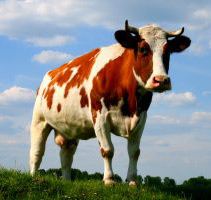
Meat eaters produce more emissions than vegetarians