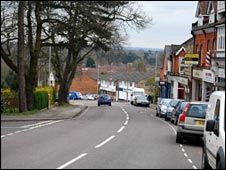
 Case Study 1: Bordon-Whitehill, East Hampshire
Catherine Morrow assesses eco town potential at Bordon-Whitehill
Many believe that the shortlisted location of Bordon-Whitehill would benefit enormously from the arrival of an eco town. Bordon-Whitehill is home to a large 600 acre brownfield site which could become a new eco town when it is vacated by the Ministry of Defence in 2011.
East Hampshire District Council's (EHDC) Planning Policy and Heritage Manager, Alistair Speirs, explained to me that until now, many Bordon-Whitehill residents have felt let down in the past as the levels of local facilities have not matched the housing availability.
EHDC is keen to stress that, since 2005, it hase been already implementing its own 'green town vision' but arguably the eco town proposal has helped to accelerate the speed of and scope for green development within the area.
Unlike many others on the eco town shortlist, Bordon-Whitehill already has its own existing population if the planned, modern and sustainable community of 5,500 homes in the eco town plan do materialise.
Bordon-Whitehill also has its own readymade green framework due to a considerable amount of natural conservation areas being located nearby, some of which are sites of special scientific interest (SSSI) such as the nearby Queen Elizabeth Country Park.
Yet, locals remain hesitant about the impact of building on the designated brownfield site. If housing figures exceed the Government's quota, which includes a minimum of 2,000 affordable homes, then development will extend into greenfield land which will attract dismay from residents. So, will a compromise be made between the Government, EHDC and its residents?
Plus, on another level, there is a growing awareness of the immediate effect that the loss of the garrison will have in Bordon-Whitehill. As noted by the DCLG in "Notes and recommendations from session 1 of Eco-town challenge" published on 23 June 2008;
"The loss of the garrison means that the area is estimated to lose 1112 jobs, 500 households and 30% of its school rate, therefore creating a definite need to attract and encourage business and industry to the town."
Alistair Speirs echoed the importance of the eco town attracting a wider population profile to compliment both the short and long term integration of an eco town in the area. EHDC wants to attract those individuals who are in the higher economic groups, such as those who work at managerial level to come into the area to stay rather than constantly commuting in and out of the area. You can listen to Alastair's thoughts by clicking on the right.
To date, the DCLG has said although the "project needs to be pioneering", that "the passion and commitment from the local authority is praised" and "the community-based approach is impressive." (Source: "Notes and recommendations from session 1 of the Eco-town challenge", 23 June 2008).

On the spot report:Catherine Morrow in Bordon-Whitehill
EHDC's Alastair Speirs hopeful about eco town
Bordon residents sound green and eager