A Japanese court has banned right-wing protesters from attending a theater showing The Cove.
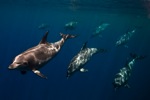
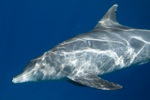
The film which depicts the slaughter of 23,000 dolphins every year in the fishing town of Taiji has infuriated bullhorn-wielding ultra -nationalists which say it is anti-japanese.
They claim the documentary is promoting Sea-Shepherd's conservation interests.
In order to prove their point Tokyo has placed the Sea-Shepherd leader, Paul Watsonon an international wanted list and have said he is a “eco-warrior”.
The film, directed by photographer Louie Psihoyos, won Best Documentary Feature at the Oscars last month after winning acclaim from around the world.
A global ban on commercial whaling may be lifted in a deal that would see fewer whales killed.
According to AFP Iceland, Japan and Norway have used legal loopholes to flout the 1986 ban on the commercial hunting of whales.
This has resulted in the killing of more than 1.500 marine mammals in the 2008-2009 season alone.
The 88 members of the International Whaling Commission (IWC) are holding a meeting in Agadir, Morocco this week to discuss whether or not they should legitimise a ban which would permit Japan, Norway and Iceland to legally hunt whales in the Southern Ocean whale sanctuary in exchange for cuts in the number of whales killed.
Three of the largest international non-government groups, Greenpeace, along with WWF and Pew Environment Group took a few people by surprise whey they agreed to the lifting of the ban.
A spokesperson of the Whale and Dolphin Conservation Society, Nicolas Entrup said: “If the IWC member governments want to regain the trust of their peoples they need to pull the plug now, stop these flawed and ‘lowest common denominator’ negotiations and leave the moratorium untouched.”
The Chair of the IWC Cristian Maquieira said: “‘The proposal was developed because most members of the IWC, whatever their views on whaling, recognised that the IWC was not doing a good enough job on whale conservation and the management of whaling.”
He added: “Given the wide range of views of our members, it had to be a compromise proposal – and that inevitably means that no-one gets everything they want – given the criticism we have received from all sides, we are probably not far off the correct balance.”
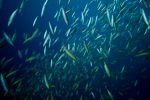
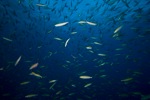
The European Commission on Tuesday announced an early end to the bluefin tuna fishing season.
“The closure of the Purse Seine fishery is necessary to protect the fragile stock of bluefin tuna and to ensure its recovery as envisaged by the recovery plan of the International Commission for the Conservation of Atlantic Tuna (ICCAT),” the Commission said.
EU Fisheries Commissioner Maria Damanaki said “It’s not an easy decision but there is no other way.”
The ban covers the Mediterranean and Eastern Atlantic fishing grounds and is due to “exhaustion of the quotas allocated to them”, she added.
Head of Fisheries at WWF Mediterranean Dr Sergi Tudela said in a statement for WWF: “The early closure of the EU’s Atlantic bluefin tuna Pursue Seine fishery does not point to recovery of the fish -it points to the gross overcapacity of the fleets.
“That EU Pursue Seine fleets have in the space of a week caught their whole annual quota of bluefin tuna in the Mediterranean is further proof that these boats are simply not appropriate for this fishery and that the whole operation is entirely unsustainable -not to mention economically unviable,” he continued.
Greenpeace campaigner Oliver Knowles said: “ Bluefin tuna is on the brink of extinction and fishing should never have taken place this year.”
The decision to allow any bluefin tuna fishing this season was “another example of how politics have failed our oceans and the Mediterranean,"he added.
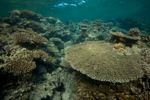
More than 245 marine scientists from 35 countries are saying a worldwide system needs to be established to protect large marine reserves.
They say it is "an essential and long-overdue contribution to improving stewardship of the global oceanic environment."
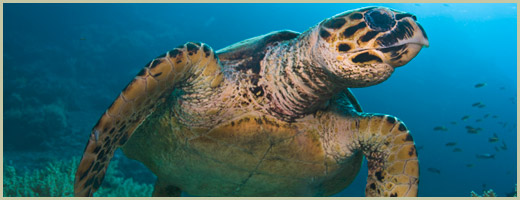
The Global Ocean Legacy, a project of the Pew Environment Group released the statement today in honour of World Oceans day.
According to Dr Callum Roberts, from the University of York’s Environment Department: “Overfishing, pollution and climate change are adversely affecting the health of the world's oceans and very large reserves can help reduce these problems.”
"The need to set aside more and larger marine reserves as one means of ensuring the continued health of our oceans is well-accepted among marine scientists," said Dr. Bernard Salvat, noted coral reef scientist and professor emeritus at the University of Paris' Ecole Pratique des Hautes Etudes (EPHE) and the French National Centre for Scientific Research (CNRS).
"More than a century after nations had the foresight to protect important landscapes like Yellowstone National Park in the United States and Kruger National Park in South Africa, they have just begun to turn their attention to protecting similarly significant places in the sea," said Jay Nelson, director of Global Ocean Legacy.
"The world's leaders need to recognize what more than 245 marine scientists from across the world understand: that the designation of very large, highly protected marine reserves is critical to maintaining the health of the ocean environment,” he added.