FAQ

Who regulates horseracing?

The Jockey Club is a private thoroughbred breed registry that regulates the production of thoroughbred racehorses, and also creates the “rules of racing”. The Jockey Club and local race associations appoint stewards for each track who are accountable for the enforcement of rules and regulations. Within this regulated environment, experienced journeyman jockeys are “free agents” who are permitted to contract (normally through an agent) with owners and trainers to ride certain horses in specific races.

Who are the British horseracing board?

The British Horseracing Board (BHB) governs and regulates the sport. It is the British Horseracing Board’s role to ensure the sport develops successfully (Coward, 2007).The BHB is the backbone of horseracing in the UK. It runs racing, compiling fixture lists and race programmes and manages finances concerned with the industry. It has 120 employees but is indirectly responsible for 100,000 people involved in the sport. The British Horseracing Board was set up in 1993 and whilst the Jockey Club enforces the rules the BHB handles the promotion and marketing of the sport liaising with owners, sponsors and race goers.
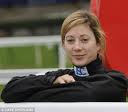


"Hayley Turner - Interview"

(AUDIO) There are no barriers for female jockeys.

"Luke Harvey - Interview"

(AUDIO) Women will never be equal to men in horseracing.

.

"Kim Bailey's racing yard"

(VIDEO) Female stable hands are treated differently within racing yards, say staff in the industry.


"It's a strength issue"

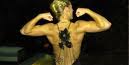
Within racing, women are faced with this real and fair debate; whether they can ride a racing finish as well as a man who, as science has proved is physically stronger..

"Riding around in circles"

Going around a track is the usual course, perhaps more fitting to say around in circles for women.

.

"Falling short"

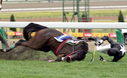
The shortage of successful female jockeys may put many young girls off making a career in the saddle.


"Success in flats not heels"

Women are given more opportunities on the flat, one reason proposed for this is that women can now do the low weights better than males.

"Two can play that game"

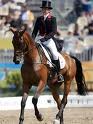
It used to be said women couldn't stand up to Three-Day-Eventing. Now they are beating the men regularly and actually leading this field.

"Good as a male, exceptional as a female"

A shared opinion amongst people in the racing industry is that you have to be good to make it as a male jockey, but of exceptionally high ability as a female to stand out and be given the opportunities.

"Equality in the workplace"

Female stable hands are treated differently within racing yards, say staff in the industry.