Sport of kings not queens
Female involvement in sports, particularly at the top level of sport performance, has changed dramatically over the last hundred years. In countless sports women have achieved equality. Laura-Jayne Roberts investigates why horseracing remains a sport where discrimination against women still appears to be rife.
Sport, for some a hobby, for others a career, for women in horseracing it may still be a struggle to do either.
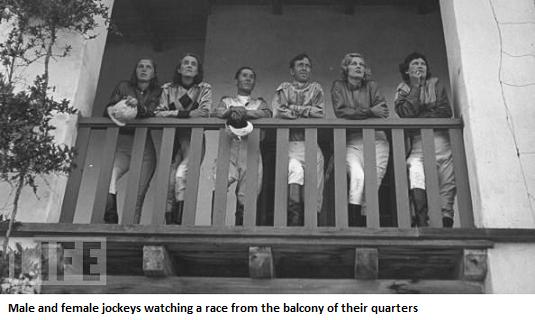
With a history stretching back more than 800 years, traditions of the sport created significant entry barriers for the first female jockeys. Early attempts by women to race were blocked by boycotts from male jockeys in an example of “co-worker discrimination”.
In 1975 women were allowed to ride as professionals on the flat (jump racing was still considered "too dangerous") and, for the first time, girls could apply for apprentice licences in the same way as men. In 1976 the Jockey Club was dragged into the 20th Century with the passing of the Sex Discrimination Act. Women were free to ride over jumps.
“Jockettes”
Female emancipation did not exactly burst out of the starting stalls; their arrival on the scene was not greeted well. Patronised by headlines such as "Watch out Lester, the girls are coming!" they were referred to as "jockettes". However, it was a start, and the novelty value of women riders pushed up attendances and attracted great interest.
Chrissie Barnard, stable hand for trainer Charlie Mann, said: “History does play a large role in why girls find it hard to be accepted in this industry, because for year’s women were not granted licences to ride, it was not deemed ladylike.”
Previously, sports were seen to oppose feminine qualities. Medical, aesthetic and social reasons were given to oppose women’s participation. Although these ideas have faded and in many sports women are leading their field, in horseracing this has not happened.
Perhaps the most obvious sign of the sports deeply rooted conventions are displayed by the jockeys. Today there are well over a hundred professional male flat racing jockeys in England, but fewer then a dozen female.
“Male dominated”
Racing broadcaster, Luke Harvey said, “Horseracing is an extremely male dominated sport and the history and traditions that have made the sport, can be seen to have created considerable barriers that prevent women from becoming jockeys.”
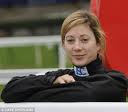
There are a number of successful female jockeys who routinely ride winners, such as Hayley Turner and Kirsty Milczarek. But it does seem that female jockeys even today continue to face discriminatory barriers.
The top female jockeys do not often ride the best horses and females outside of these few do not often secure any mounts at all. Whilst there is a shift starting to occur in racing, this is slow, and many believe women will never achieve equality in this male dominated sport.



- Hayley Turner weighing in.jpg)