The Background
What is (not) Inclusive Education?
Around 40 years ago in the UK, a 16 months old baby girl born with physical impairment was taken away from parents, placed in a special boarding school, where she was brought up until the age of 16. Though completely capable of using her arms, her earliest memory remains that of being fitted with artificial arms.
"It was easier to write without them, but it was thought it was best if we had attachments to make us look 'normal’,” the girl, now woman, recalls.
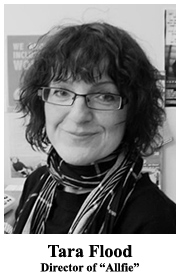 Today she is fighting against the continuing of this kind of approach to disabilities as the chief executive of the award-winning Alliance for Inclusive Education (Allfie), an organization run by people with disabilities, which campaigns for disabled people to have a mainstream education.
"The philosophy at our school was that being disabled was bad, so you must do all you could to appear not disabled," she recalls. "We'd had it instilled in us that you must do all you can to fit into the world, because that's how you're going to get on."
Internationally, Inclusive education is now firmly established as the main policy, imperative with respect to children with disabilities or special educational needs (SEN).However, in the UK, though the development of policy towards inclusion is in many ways well-advanced it seems to remain by no means all-encompassing.
It was and still is a very slow process that has been taking a pattern on “two steps forward, one step behind” in the past 20 years and to the day.
A failed policy
Since 1997, when the Labour Party came to power, both the Conservative and the Labour government have moved towards what they feel is inclusive education. They have been pursuing a policy of inclusion which came from belief that all children with special education needs had the right to be educated in their local schools, with other children of their age.
Another strategy of following the policy was closing down many of the special schools.
Janet Chaproniere, Family Support and Outreach worker at Stokewood Children’s Centre in Bournemouth, who has been supporting parents, recalls:
“Nobody liked that idea - in some respect there were some merits in having good quality education for children who would find it extremely difficult to cope in mainstream schools – like autistic children, because of the nature of condition. They don’t want to be in social groups.”
”The problem has been that whilst they’ve talked about inclusion they haven’t actually followed it through, so it’s been primarily about integration and not inclusion,” says Jonathan Bartley, who runs the Christian think-tank Ekklesia and is a parent of a wheel-chair using 7 years old Samuel who has spina bifida.
He points out at what he sees as the most interfering difference between integration, on the one hand, which is just placing a child with SEN label into a school, and inclusion, on the other, which is an active process of making sure that child becomes a full part of the school, taking part in all the activities, in every area.
“Building relationships, having full and meaningful life and be really included as any other child should be part of a mainstream school education,” said Mr Bartley.
Like Samuel’s father, many parents feel that they’ve been let down, because their children may have tried to go into mainstream school, but the resourcing, the training that is necessary for successful inclusion has not been provided. They feel that in some respect the Labour policy has failed. Not because it’s been a policy of inclusion, but rather because it hasn’t been.
New government, new policies, new budget cuts and growing numbers of children with SEN labels
An updated recent research released in July 2010 by the Department for Education, shows that Special Educational needs labels have doubled in the past 20 years, and it is announced that every fifth child is labeled with a Special Needs statement. An additional 8,280 were diagnosed by a multi-agency team as requiring a formal 'statement' of need.
The Release figures show that in 2010 more than 30 000 children between the age of two and four were assessed by schools or nurseries as having special needs and additional 8,280 were diagnosed by a multi-agency team as requiring a formal 'statement' of need.
As the new UK Government took office on 11 May 2010, the situation on Special needs has been shaken by the Conservative’s manifesto, the Academies Policy and the budget cuts, none of which were in favour of the children with disabilities and institutions of their education.
When the Conservative Party was fighting the general election, they had in their manifesto the commitment to stop the bias toward inclusion.
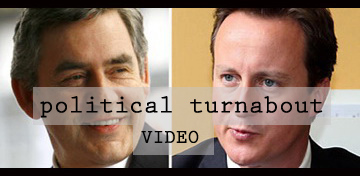
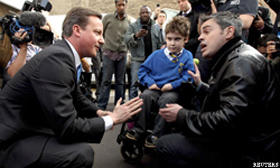 ”My own experience would suggest that there isn’t a bias towards inclusion. It’s very hard still to get a child into a mainstream school,” protested Jonathan Bartley who has on one occasion prior to the election, confronted David Cameron. He voiced concerns about Tory plans to end the bias towards inclusion of children with special needs in mainstream schools.
Responding to the alleged segregation of disabled children in the education system, Mr Cameron whose disabled son Ivan died last year, said that as the parent of a disabled child himself, he was "passionate" about helping parents get the education that was right for them, BBC reported.
What the new official policy about the Inclusion of the children with Special Educational Needs will be, no one knows yet. Announcing Green Paper review which is to be launched in autumn, Children’s Minister Sarah Teather said that she will look at a wide range of issues for children with SEN and disabilities.
In the mean time, a mother’s response as she chose not to comment on her coping with the changes was:
“I’m going to decline your invitation, as we have too much on over the next few weeks with new school years to plan for. Leaving and transferring classes, teachers and classroom are all very emotional and need to be managed correctly.”