

New body reactions to toxins contained in our clothes
According to doctors, the 50’s rage for efficiency and industrialization, has now been linked to a number of newly occuring and extremely severe body reactions like Multiple Chemical Sensitivity (MCS). The fashion industry, fiercely affected at all stages of clothes production, now possess a serious threat to the wellbeing of those who choose to wear a mass produced clothes.
Starting from the fields where crops are cultivated and onto dying, finishing, labelling, shipping and even storing goods in the shops; garments go through a rigorous chemical processing, resulting in potential danger of intoxicating those who would wear it with a spectrum of noxious substances.
Despite MCS being officially nonexistent, many doctors around the world acknowledge evolving pattern of diseases related to the harmful toxins. Dr Rajendra Sharma from The Diagnostic Clinic in London, said: “The MCS does cause health problems. Firstly by directly damaging the tissue and secondly by triggering the immune response which causes inflammation, and eventually damages the organ.”
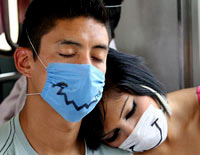 The hazardous volatile components can be encountered at any stage of production and cling to fibres of clothes transmitting tiny amounts of detrimental for humans smells and odours.
Even sustainably produced garments are being processed with chemical dyers and finishes. Linda, who suffers from MCS, says: “Most people making or selling eco fashion have no idea how toxic their products really are, thinking that just because there's some hemp or organic cotton in them that it is sustainable. Yet they are still full of petrochemicals added after.”
Often elements would adjoin during the shipment and storage of goods where the clothes lines can be stored next to essential oils, incenses or other chemical fragrances.
Dr Sharma explained that the chemical would either get directly attached to a cell membrane, or to an organelle (part of a cell that makes cell work). "Then it can attach to the DNA and actually alter our gene structure within that cell.”
According to Dr Damien Downing, the president of British Society for Ecological Medicine [BSEM], this often occurs to people working in the industry, and getting exposed to the big doses of chemicals, which then “activates the immune system and after that you react to the smaller doses too. “
 But due to the nature of the disease, it is extremely hard to identify it within a body as the symptoms range from tiredness and muscle pains to much severer limbs’ numbness and other dysfunctions.
Dr Sharma elaborated: “Sufferers would feel better when they go to the coast or up the mountain. So it is hard to tell, and you can not blame every tiredness on TATT or on MCS But there is also stress related issue. ”
MCS, can also be treated by maximally reducing the exposure to chemicals, however in severe cases this could lead to a sheer detention in a four bare walls.
The milder version would require a temporary escape to a ‘cleaner’ environment which could mean going on the holidays. But with the great difficulty in sourcing and financing all the sustainably produced and necessary for living goods, this could become a highly problematic issue. The question of moving the house or changing a workplace is a big commitment for anyone, but for those with MCS, ignored by officials and national health institutions, could cost a capital or sheerely become a matter of life.
Related links:
 Dr Sharma :

 MCS is recognized disease in Germany, Austria and Luxembourg under various
 MCS is also known as: