

A LIFE BEHIND BARS
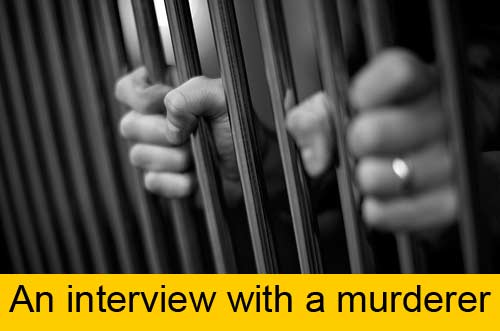
 Six years ago, Erwin James tasted freedom for the first time in twenty years after finishing a life sentence. Convicted of murder, Erwin was locked away in a high security jail with hundreds of other violent criminals.
Somehow, he turned his life around from inside the prison walls, but unlike many prisoners, Erwin maintains that he was one of the lucky ones.
Having the opportunity to study whilst in prison, Erwin graduated from the Open University. Now, Erwin is a professional journalist working for the Guardian, with two successful books under his belt.
He is a firm believer that the current prison system needs to be radically reformed. Based on his own experiences, Erwin explains why.
Suffering from a “chaotic, disruptive and dysfunctional” childhood, Erwin’s crimes escalated from petty offences to serious violent crime. Following the death of his mother when he was seven-years-old, Erwin was taken in to care and received little formal education. At aged ten he was sleeping rough, and for a few years he committed various minor crimes. He fled the country as a fugitive until 1984 when he turned himself in to the British authorities, admitting to robbery and murder after an accomplice had been arrested.
Erwin explained his attitude to prison before he was sentenced:
Erwin James Clip 1 by emmavictoriawilson
During his first year, Erwin was locked in a cell for 23 hours a day.
“I spent a lot of time reading and thinking. Prison was a very aggressive place, so I exercised to keep fit. As soon as the doors opened there was always some sort of aggressive thing going on in the recess, someone getting bashed, or getting attacked for one reason or another.
“The staff were very hostile at Wandsworth prison. There was a lot of bullying going on. There were a couple of nice officers, but it was an aggressive place.
"When I went to my first long-term high security prison, it was different. I could see a regime there; there was an education department, a chapel, a gymnasium and an exercise yard so I could go for a walk in the fresh air for an hour."
Erwin began to see possibilities and started to feel that there might be a way of using prison in a meaningful way, although his ideas were very embryonic at this stage:
Erwin James Clip 2 by emmavictoriawilson
A few years into his sentence Erwin was introduced to a psychologist who convinced him that he had worth and was valuable to his community. He was persuaded to attend evening education classes where he studied English, Geography and History. Erwin was surprised to discover that he enjoyed learning; he would return to his cell after classes, read and do his homework.
“Education became a means of life; I became who I should have always been," he said. Erwin embarked on higher education, and six years later majored in History.
“Prison life is not geared to creating great students,” he added. “Prison life is very destructive. Prison hierarchy is very primitive, so anybody who wants something good to come from prison has to overcome the hierarchy and prison landing life. At one prison I was in, there were three prisoner killings over a two and a half year period. Every other week someone got stabbed or scolded. There were riots and a fifteen hour siege.”
Erwin found a way to survive on the landings and focussed his attention on using his time constructively. His reputation as a fine writer grew, and he began to feel he had a positive role to play in his community.
When his twenty years were up, he left prison with a degree and soon got his life back on track. Now he is an established writer for one of Britain's most successful newspapers.
Erwin believes that the media still distort prison life:
Erwin James Clip 3 by emmavictoriawilson
Erwin said that nobody is what they seem in prison: "Everybody’s an actor and has high defences. Unless that’s broken down by a positive attitude towards the prisoner, it’s much easier for the prisoner to attach himself to a criminal identity. Especially young offenders; they’re like gladiator schools, they’re rough as hell those places. That often leads to people meeting other prisoners who have also lost the plot as far as rehabilitation is concerned, and they do learn from each other. They bolster each other’s criminal aspirations. But I wouldn’t say generally that they’re universities of crime.”
Erwin strongly believes that prison could work if there was less over crowing, more resources aimed at prisons and more opportunities for prisoners to learn work skills, social skills, personal development and feel like they have something to offer society.
He argues that if criminals are simply warehoused in prisons and given limited access to what they need, there is a high chance they will re-offend on release.
Erwin supports the Liberal Democrat’s policy of scrapping short term sentences, although he thinks it should go further: “It’s ridiculous, that person could be a breadwinner, and he could be someone who’s trying to get by and has a family. In terms of women, it’s so disruptive to send a mother to prison; the kids go in to care and you’re creating the future prison population. It causes more harm for society than good.”
Dispelling the belief that community service is easy, Erwin argued that it can be a more effective punishment:
Erwin James Clip 4 by emmavictoriawilson
Erwin urges society to respect community service and accept that if people are prepared to work for penance, then they should be accepted back in to the community: “We have an attitude towards all offenders that they’re scum; that once you’re in the criminal justice system you don’t deserve to be back in the community. We make life so difficult for people who have offended which makes it more difficult for those people to live constructive and contributing lives. They end up being more marginalised, more detached from society and less obliged towards society.”
Erwin acknowledged that some people need to be imprisoned: “Certainly I did, there was no question that when I was removed from society I deserved to go to prison for a long time.
“We have three choices. Bring back the death penalty; hang, shoot or inject people like me and get rid of them for good. Or we build more prisons and never let anyone out of them. Or we keep the status quo where we let them out of prison. If we do, we’ve got to let them out fit to contribute to society. If we don’t, it’s pointless letting them out.
“I spoke to a fifteen-year-old who has a minimum sentence left to serve. His victims are probably happy about that; for them, it’s probably not long enough. For lots of victims of crime, people should not be released; people should be made to hang, made to suffer. But if we do let people out it is in our interest to let them out in a state where they can function as contributing members of society. If we don’t do that, we’re just causing ourselves massive problems at a massive cost.
“Re-offending costs about £11bn a year. That’s in financial terms. What about human terms? If two thirds of criminals are re-offending that’s a hell of a lot of victims, because we are not prepared to use our prisons effectively.
“It’s a challenge; when people cause great harm and distress, it’s difficult for society to view them as people that need help and support and encouragement. But we deserve a prison service that is effective, that reduces crime and reduces future victims."