
Imagine if you could watch the heart-breaking love story of Titanic, the action scenes from a James Bond film, the heart wrenching drama of Gone With the Wind and the comedy from a Jim Carrey movie, all rolled into one film, with a lot of music and dancing. Would it be something you’d invest three hours of your time into? As is evident, all of the over-one-billion people residing in India definitely would.
The huge number of Indians in UK has ensured that Bollywood remains popular in this country. When Selfridges announced their Bollywood-inspired collection in 2002, it triggered a chain of events which led to a phenomenon known as Bollywood explosion in UK. The International Indian Film Awards (IIFA) also hosted it’s first ever event in London in the same year. “That’s when not just the people in Britain, but people worldwide sat up and took notice of Bollywood” says Steven Baker, a London-based Bollywood reporter.
The word Bollywood is derived by joining Bombay (or Mumbai, since 1995) and Hollywood. Although it is not a physical place like Hollywood, Mumbai is where most of the crew and cast are based in. However, Bollywood has been construed as a condescending name by many people from the industry. “There is enough in the media about how Hindi films are often copied from Hollywood movies. Do we need a constant reminder to it by calling ourselves Bollywood?” asks Michael Earnest, a film director who has recently moved base to London. In spite of fierce opposition from within the industry, the name seems to have stuck.
Bollywood generally runs with a set formula, with action, drama, comedy and romance all in one movie. These films are known as ‘masala’ films, masala referring to the Hindi word for spices. Like the food, Indians like their movies to appeal to all of their sensibilities.
HISTORY OF BOLLYWOOD
Bollywood films have a very long history to boast. It is ironic that a film industry which is synonymous with its song-and-dance experience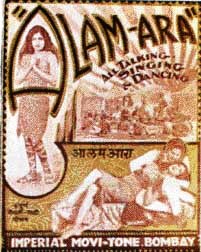 started off with a silent film. ‘Raja Harishchandra’ (King Harishchandra) was a feature film made by Dadasaheb Phalke in 1913. The first Bollywood film with sound was Alam Ara (Light of the World), made by Ardeshir Irani in 1937. Several more movies were made after Alam Ara. However, it was only after Independence that the stage was set for films that would be identified as Bollywood.
The period between 1940’s and 1960’s is popularly known as the Golden Age, with some of the most critically acclaimed films coming from this period. “I personally find myself being fonder of Hindi films that were made in the 50’s and 60’s. I preferred them when they were Indian and when they spoke to an Indian culture” says Sarfaraz Manzoor, a British Asian journalist working at The Guardian. It was a time when the film makers looked at cinema as a medium with potential to educate the masses, rather than only entertaining. The films from this period generally dealt with the social issues of the time; like poverty, power of richer communities and how they always crushed the poor man.
The 1970’s and 80’s was when modern cinema kicked in, with action and romance taking the centre stage. The more realistic and hard hitting movies started being termed as ‘parallel cinema’. The central themes of movies from this time was typified by a male protagonist, alone and rebellious, against the system.
The ‘system’ alternating between the Government, the richer community or a particular villain/vamp who had personally wronged the protagonist and so on. These films were most likely to end with a surprisingly happy ending. “For me, 70’s is what the term Bollywood stands for. It has been a fascinating journey till 2010 but, that remains to be my favourite”, says Sunny Singh, and Indian novelist.
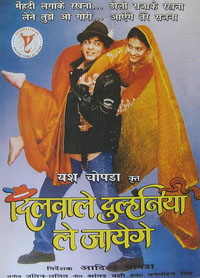 The 90’s Bollywood formula was very romance centric. Along with typical storylines, it was the birth of Shahrukh Khan, who is still heralded as the Kind of Bollywood because of the number of hits he has delivered, most of them being about romantic relationships. There were still clashes and villains, but this time they were the wealthy parents of the girl who disapproved of their courtship.
However, the last decade has been a mix of all these formulae, and many movies have not even adhered to any particular formula. Though there have always been a certain amount of movies in every decade which tried to break away from the usual fare, they either didn’t do too well, or were christened as ‘parallel films’ or ‘art films’ which automatically alienated them from the audiences who only wanted commercial films. With globalization and growing exposure and awareness of the Western world, Bollywood is becoming more open to experimentation.
CATERING TO A GLOBAL AUDIENCE
However, some people like Sarfaraz Manzoor think that Bollywood has long since lost its charm. “I think Hindi films have lost their charm. They are becoming more and more westernized. The music, the dances, all have heavy western influences and it has resulted in Hindi films losing its soul” he says.
 related to what you're reading.