Headlines
Media lawyers send 'threatening letters'
Letters from lawyers are “saying we are contemplating legal action. You should keep hold of your notebook” said Heather Mills, a journalist for Private Eye.
She adds that this type of threat “is a relatively new thing” and feels that privacy is being used more in the courts than ever before.
Keith Schilling, media lawyer at Schillings, solicitors, who represents a large number of celebrities, said: “It is only rare that an injunction affects important stories.”
Heather Mills says that the issuing of injunctions is not something that she lets affect her journalism as she is always, and has always been, respectful of someone’s privacy.
Deciding to fight an injunction is where the expenses start to mount comes in and the affect that this has is commensurate with the size of the newspaper.
Mr Schilling adds that “I would personally be very unhappy if I felt that the work I did was damaging to the proper functioning of a healthy press, which I regard as essential.”
There is scepticism over the motives of media lawyers, as Heather Mills said: “It is clearly quite a big growth area for lawyers to make quite a lot of money.”
Celebritiy Exclusives: Joe Stone and Jack Taylor
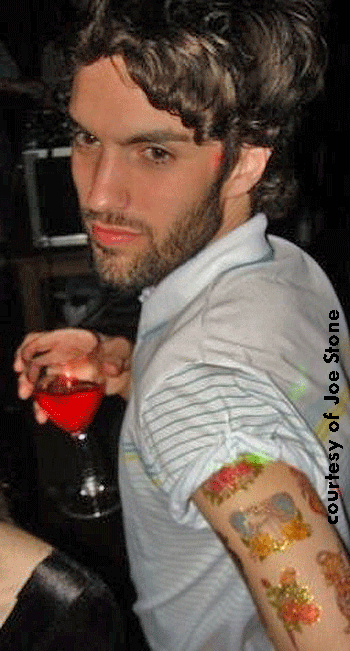
Joe Stone was in the Channel 4 programme Shipwrecked in 2007 and had his fair share of dealings with the press on his return. When speaking about his decision to go onto the show he said: “I was really unsure about whether to do it or not, it wasn’t an ambition of mine but it seemed like a fun thing to do."
When he returned from the sun, sea and sand he was slightly surprised at how journalists were able to twist words that his friends had said and take his own words and sold them in their magazines as their own.
He talks about his close friend from the show, Naomi Millbank-Smith and how she managed to use the press attention to her advantage to further her career in glamour modelling.
With all the press attention he said that it made him self-conscious but being a budding journalist, it allowed him ask the journalists that he met if he could get work experience with them; which he did for magazines such as Heat and with MTV.
Joe is a clear example of how the affect of the media can be intense and for someone who has never had that kind of attention, it can be very difficult.
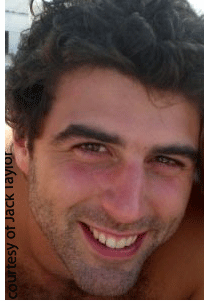
Exclusive Jack Taylor, who took part in this years Shipwrecked talks about his press coverage.
He is spending this summer in Ibiza and plans on using the fame that he has attracted to fund his trip. While he is there he will be approaching local clubs and asking if they would like him to do a personal appearence.
This shows the type of relationship that a person can have with their fame and equally how press attention can be beneficial.
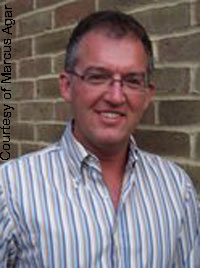
Exlusive Marcus Agar, who worked with Sam Fox, describes how she had her hard times with the press.
Legal costs scare away editors
Editors now have a heightened fear of being sued for invasion of privacy and therefore think long and hard before printing a story that has even a whiff of personal revelations about it.
Clive Coleman, a BBC journalist who has done an immense amount of research on the issue, including a programme on the subject for Panorama, said: “The newspapers feel that it is a bit of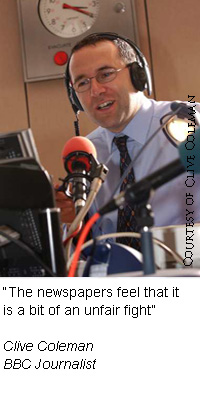 an unfair fight because successful claimant lawyers can double their fees if they win and it’s a brave editor that takes this on.”
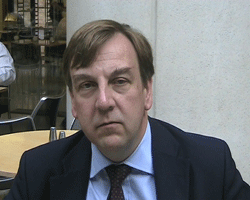
The legal costs can stretch into thousands of pounds. The House of Commons Select Committee that sat between February 24th and June 2nd 2009, focused on press standards, privacy and libel. Mr Whittingdale spoke about how the committee heard evidence that the “actual level of damages may only have been a few thousand pounds but the actual complete cost ran to hundreds of thousands of pounds and that is having an affect on journalism.”
This is due to conditional fee agreements, 'no win no fee'.Mr Coleman points out that there is a “poacher turned gamekeeper feel to it…as for many years it has been said that they have fought people on the basis of their massive resources and the poor individual who doesn’t have much in the way of money hasn’t stood much of a chance.”
The major worry now, as Ian Hislop raised at the select committee hearings, is that journalists are being stopped from writing issues that are of importance as the article “celebrities responsible for NGO struggle?” talks about.
Mr Hislop also raises the point that parliament has not legislated on this privacy issue: Mr Coleman says “it is open for parliament to step in.”
There is an argument that if there is a privacy law being bought in through court rulings, then it should be voted on my parliment. This is an issue that Mr Whittingdale MP highlights but added that it is unlikely to happen during this current parliamentary year.
Mr Coleman adds that, “you could argue that private individuals have fought cases and won and established certain principles regarding privacy and that the press now need to do exactly the same thing in relation to the public interest. They need to fight some good cases and win them. They need to establish some firm proper principles for public interest defence.”
However this is at a time when “every newspaper is now under greater financial pressure than ever before,” says Mr Whittingdale MP.
Celebrities responsible for NGOs struggle?
Celebrities have to take responsibility for the privacy rulings in the UK. The decisions of the courts in cases such as those of Naomi Campbell and Max Mosley have meant that non-government organisations (NGOs) are now suffering.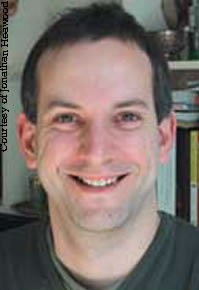
If a person, especially a celebrity, cannot pursue an action based on the information being libellous then they will try to do so, on the basis of invasion of their privacy. Clive Coleman, a BBC journalist says: “The thing about privacy is you don’t have to prove that it isn’t true, you just have to prove its private and lots of things will be covered by that.”
The problem now is that NGOs, like Global Witness, have stated in their submission to the department of Culture, Media & Sport for the inquiry on Press Standards, Privacy and Libel that they are finding that “the UK legal system is already being used by the rich, powerful and influential to attack publications.”
He added: “We don’t want a complete free for all, where anyone can publish anything about anyone else that is not desirable...but the playing field does need to levelled a bit more.”
Mr Heawood goes onto explain that: “The scale of the problem is growing quite rapidly. Last summer, almost a year ago, the UN Human Rights Committee…issued a reported assessing the state of human rights in the UK, in which they flagged up this issue of our libel laws as a problem. But the particular phenomenon that they are concerned about is libel tourism.”
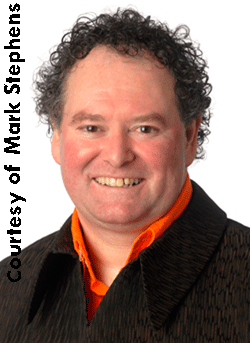
Mark Stephens, a media lawyer who works for Finer Stephens Innocent and represents a lot of NGOs, feels that the privacy rulings have led to protectionism. He echoes Jonathan Heawood’s concerns, saying that non-governmental organisations are being “largely excluded from the debate about privacy. Privacy is very much seen as a tabloid, paparazzi, celebrity kind of issue, when in fact I think there are much more important issues that underlie it.”
John Whittingdale MP, the Chairman of the House of Commons select committee for culture, media and sport agrees that it is vital that NGOs should not feel threatened by privacy or libel laws, he said: “The effect on NGOs is a serious one and where you have NGOs carrying out work which is plainly in the public interest to expose corrupt practice maybe by dictatorships, it should not be possible for that to be obstructed.”
Global Witness stated in their submission to the House of Commons select committee that, in this country “freedom of expression has already fallen below that which is protected in countries such as the United States.”
Listen to what Mr Heawood descrip how he see the journalistic model changing over the next few years.
Justice Eady is “creating a privacy law”
At The High Court last week Mr Justice Eady reached the decision that the then anonymous blogger NightJacks’ real name should be printed: he is revealed to be Richard Norton.
Blogger for The Guardian newspaper, Henry Porter, said that it is clear from this ruling and others that there is “one judge who is creating a privacy law and his name is Mr Justice Eady.”
He added: “I feel that this man has a right to free speech. On the other, it could be argued that he is using privileged information and that he is abusing his position and the trust of his colleagues and superiors.”
He defended Justice Eady by saying: “He is interpreting, he is implementing what the Human
Rights Act and what the Convention have said.”
He added that some people feel “that all the big libel trials appear to be heard by one judge and he is single handedly creating (a privacy) law.”
MPs’ expenses showed the ‘rules had been broken if not the law had been broken’ and was for the ‘greater good’
The release of MPs’ expenses by the House of Commons in the next two weeks highlights the importance of the freedom of the press.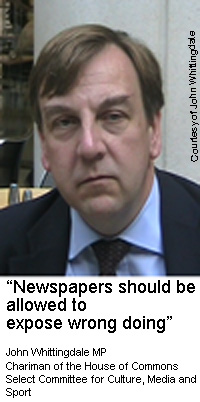
The director of English PEN, Jonathan Heawood, feels that the publication of details of the MPs’ expenses by the Daily Telegraph shows the magnitude of investigative journalism.
He said: “It seems to me very clear that the greater good, I think, has been served by the publication of those expenses.”Despite this, he also feels that these types of stories are on the decline, due to the perceived threat of legal action. Chairman of the Culture, Media and Sports select committee, John Whittingdale MP, agreed, saying: “It is important that newspapers should be able to expose wrong doing.”
There are “cases of MPs’ expenses where it was quite plain the rules had been broken, if not the law had been broken.” He agreed that investigative journalism was on the decline but feels that this is not only due to the threat of legal action but also the cost that ensues.
The Press Complaints Commission (PCC) issued an email to editors of the national newspapers asking them to respect Susan Boyle’s privacy as it was worried that media attention would “impact on her health”, Director of Public Affairs for the Press Complaints Commission, William Gore said.
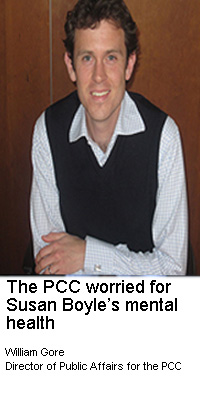
“If there were any potential grounds for privacy complaints it might be on the basis of the revelation of her state of mind,” Mr Gore added. The issue is, as Mr Gore states, that “It had been made public by her representatives that she had gone to the Priory.” Susan Boyle has not yet made any complaint to the PCC.
The PCC’s privacy code has not changed since the death of Princess Diana when the public felt that journalists and the media had been responsible for her death therefore “the code of practice and the regulation of newspapers” was tightened up, Mr Gore said.
It would take another public outcry like that one for it to be changed again, said Mr Gore. “Going onto a public vehicle like that (Britain’s Got Talent) I think intrinsically compromises your ability to go on living as you were before.”
LATEST NEWS
EXCLUSIVE
Celebrities responsible for NGOs struggle?
NGOs suffer at the hand of the celebrity culture.(Read More)
Justice Eady is “creating a privacy law”
Bloggers look out Justice Eady is about. Where does his latest ruling leave bloggers. (Read More)
Watch:'Things aren't exactly as they happened'
EXCLUSIVE:Hear how Joe Stone from Shipwrecked dealt with the press and why he does not believe everything he reads.(Read More)
MPs’ expenses showed the ‘rules had been broken if not the law had been broken’ and was for the ‘greater good’
The release of MPs’ expenses by the House of Commons in the next two weeks highlights the importance of the freedom of the press. (Read More)
Susan Boyle might have “potential ground for privacy complaints”
EXCLUSIVE The Press Complaints Commission (PCC) say Susan Boyle could take action against the newspapers. (Read More)
Media lawyers send 'threatening letters'
'You should keep hold of your notebook' (Read more)
| Exclusive Interview with Jack Taylor from Shipwrecked(Reaction to the press coverage) | Watch John Whittingdale MP, Chairman of the House of Commons Select Committee discuss the decision to focus on privacy(Watch) |
 |
 |
| Exclusive What Mark Stephens thinks of Amanda Holdens court case (Listen) and Ashley Cole's case(Listen) | ExclusiveJoe Stone from Shipwrecked speaks about his media coverage since the programme(Watch the video) |
 |
 |
| Listen to Sam Fox's ex-pr man describe her troubles with the press | Listen to a director of an NGO saying how he sees the future of journalism due to privacy |
 |
|