GRADS
Click on a face to find out their story.





Curriculum Vitae’s…what now?
"Don't panic, things are going to take longer than you think and you've got time now and in the next 12 months to build your CV" this is according to David Ainscough, Deputy Director of the careers service at Cambridge University.
It's time to dig out your "olde" CV and update it...but wait...what have you done for the last year?
Do you have visions of creating a 'stand out from the crowd', eye-catching, dynamic and jam-packed CV?
What do the “experts” really think matters?
Listen to the advice from university careers services or read more about work experience and postgraduate studies below.
“I’ve drawn the line with unpaid work.”
University top up fees, living costs, postgraduate degrees and the price of travel are all expenses students are constantly trying to cover.
Expectations for a CV fit to burst with (usually unpaid) work placements is one of the latest credit-crunching tests for graduates.
Now, more than ever, standing out above the rest with a jam-packed CV is the only way to guarantee you get through the application process.
But one particular graduate has had enough and has “drawn the line with unpaid work.”
Neil Kingston graduated from Leeds Metropolitan University with a degree in Business Studies and now dreams of making it big on the radio: “I agree that you need actual experience, a degree is only something on paper.”
“Free work…you’ve got to do some but you’ve got to be careful that you don’t overstep the boundary and get taken for granted.”
After working, unpaid, for a year he is now looking to earn himself a living: “I need to start a pension.”
For some areas free work has always been on the cards and Leeds University student Charlie Bland says: “in terms of work experience nowadays it is definitely true that in the creative sector more so than others they’ve always taken their interns for a ride we’ve always had to do it unpaid.”
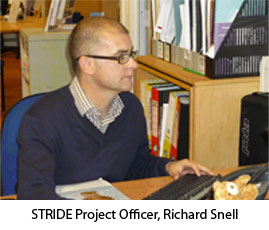
Mr Snell’s Bournemouth based company has tried to help students: “We’ve just organised the South West Regional placement awards where we’ve given bursaries of £150 to students within those two sectors.
"We’ve assisted 40 students in a small contribution towards their travelling costs which means they can actually spend time with South West businesses gaining valuable experience and give their high skills to businesses.”
However it seems as though the move to recruit free labour is spreading as the credit crunch highlights company budgets.
Director of the online company Employment 4 Students, Chris Eccles, says: “this year we’ve noticed an increase in the number of companies trying to take on interns in unpaid positions, I think as part of a cost cutting exercise.
“To be honest those vacancies haven’t been popular at all with students which I’m quite pleased about because there is still paid work out there.”
Leeds University’s head of student marketing and recruitment Helen Clapham thinks it is up to each individual to decide if unpaid work is the most effective way of achieving their goal but she adds: “there will be some employers that probably exploit that.”
Mr Eccles says: “It’s actually a bit of a fine line with minimum wage legislation and unless the position is a voluntary one where the intern can pick their own hours and refuse to do tasks they don’t want to do…they should be paid the minimum wage.
“I think those companies are trying to blur those lines a little bit to cut their labour costs.”
Work experience can introduce you to new career paths and provide you with a clearer understanding of different industries but Oxford University careers advisor, Jennie Courtney advises: “you want to be going in with your eyes open with a research strategy which means that you’re actually learning along the way.
“In terms of how much work experience is enough it’s as much as will expose you to the industries that you’re interested in and will develop the skills that will ensure you will be able to get a career in that industry.”
‘Education, education, education’
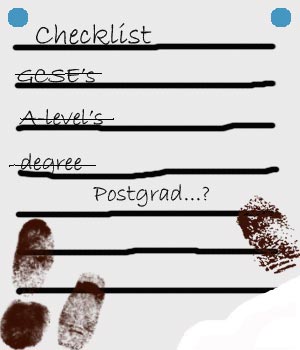
Companies are advising graduates to take on temporary work rather than opt for postgraduate degrees yet this year applications have risen by 10%, according to Cambridge University’s careers service.
The credit crunch has caused many students to re-evaluate how much their degree is worth and a postgraduate degree could enhance your employability.
“You do see the shift of a need to have potentially for some students a Masters qualification” says Deputy Director of the careers service at Cambridge University.
Leeds Metropolitan graduate Neil Kingston says: "I'd be doing a postgrad for the wrong reasons because I'd only be doing it to dodge paying back my loan and to ride out the recession.
"I wouldn't be doing it because I want to study because I hate study."
Leeds University’s head of student marketing and recruitment Helen Clapham agrees that more students are applying to postgraduate courses to avoid the current climate: “which is typical of previous recessions.”
Although postgraduate degrees are a way to increase your employability and are no doubt attractive to many employers the cost of another year (or more) in education is enough to put off some graduates.
Sheffield graduate Anna Tanton says: “I’ve looked into further study but I’ve had to put it off for the moment due to lack of finance.”
Masters degrees used to be an option only for those passionate about education: “as part of the Cambridge ethos you think about going on to do further study” says Mr Ainscough.
Maybe as a result of the recession another year of education seems to be a natural path to follow for more and more students.