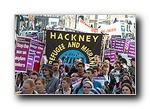
6/7/07
A leading union official has accused the government of being "too scared" of the tabloid media to enforce fairer reporting over asylum.
Former president of the National Union of Journalists Tim Lezard, believes more stringent asylum policies are the result of politicians "pandering to the media":
"At the NUJ, we want to see an end of gratuitous references to asylum-seekers in the reporting of stories.
"You wouldn't write that 'a fat man was in court' but papers always say when an asylum-seeker is in court, even when it has no relevance to the story".
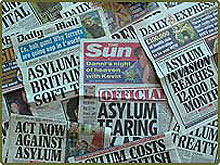 Though still disappointed with pejorative media coverage, Lezard concedes that standards have risen in some areas of refugee and asylum reporting:
"Certain things have improved, terminology in particular. Newspapers have stopped calling people 'bogus asylum-seekers' because that expression isn't valid."
Forward Maisokwadzo, coordinator of the Exiled Journalists Network believes more accurate reporting is the result of action by the Press Complaints Commission:
"In 2003 the PCC intervened and told newspapers that the phrase 'illegal asylum-seeker' was legally inaccurate and should no longer be used," he said.
"The reporting of these issues doesn't always have to be positive but it should be fair and accurate. It seems that certain newspapers are in collusion with certain politicians."
Last month, several Scottish journalists were awarded prizes for their 'fair and accurate' reporting of asylum-seekers at last month's Refugee Week awards.
Damien Henderson, a reporter at The Herald and among those commended for their work, believes that the issue is treated with more sensitivity in Scotland:
"There's a different climate north of the border. Asylum-seekers are treated more fairly and the media tend to focus more on their human rights."
|