 |
|
|
|
|
|
|
 |
|
|||||
 |
 |
 |
 |
 |
 |
|
| feature Writers' bloc Just over two years ago, a 24-year-old BBC journalist hit on an idea. The problem: how to get young journalistic talent not only noticed, but also published, promoted and most importantly, paid.
It’s not much, he says, because his site does not rely on advertising for its income. It /relies on its writers instead. To be a great reporter seems an almost unattainable goal for many young journalists starting out. Many have little journalistic writing experience, few cuttings and fewer contacts. But unlike most syndication agencies, which split the takings with their writers half-way, Great Reporter’s writers earn 65 per cent every time an article is sold on. Although Richard admits he might have been inspired by the numerous syndication agencies around, it was really his own experience of trying to crack the hack world that gave birth to Great Reporter. “The real raison d’être of putting the site together”, says the journalist-cum-entrepreneur, “was to help people in the situation that I found myself in when I started out in journalism and the media industry. “I found it incredibly hard to break into and I think I just wanted to design a platform that would give younger journalists a look-in and at the same time, make it into a profitable business model that would sell their copy on and give them a commission – and at the same time, give them something that they could put together for their portfolio.” Initially, Great Reporter was aimed at struggling young journalists and stringers – people who were able to construct a good story, but who were not necessarily of interest to commissioning editors on mainstream publications. Why they could write well but could not get published is simple. Says Powell: “a) they didn’t have anything published before and b) the editor didn’t know them.” Two years on, and the website has almost become a mirror image of its oldest members. “It’s grown a bit now to encompass established journalists and those who have written stuff and sold it to one territory,” says the brainchild of the site “but who haven’t thought about selling it to other territories. So if an author’s work has been sold in Europe, the Great Reporter staff will try to sell it anew in the US or Asia. He quickly adds that he would like to sell to Antarctica, too. That way he can claim to have syndicated articles on every continent. “Getting hold of the contacts isn’t difficult,” claims Richard. “It’s just establishing a relationship with them, and making sure that what we supply to them is relevant, and ultimately, profitable.” What, then, will make great reporters turn in a tidy sum? Powell doesn’t specify any particular content, but his newsletters do advise members what is flavour of the month with commissioning editors – what he says “they will get their wallets out for.” Sadly, according to Richard, international reportage is on the wane, whereas waxing lyrical like a gossip queen is interest in celebrity stories and women’s issues. But isn’t it tough for those starting out to find such stories? The site’s creator doesn’t believe so. “It’s an extremely tough marketplace and if you’re going to convince an editor to give you your first job in journalism, you’re going to have to come up with some pretty good ideas.” It may sound like a hard truth for a young wannabe journalist to swallow, but Richard himself learned the hard way. In only his second year of university, knowing that he had to make a name for himself, he travelled with a friend to Kosovo as a freelancer. “And there we were, 21 years old, in the middle of a war zone,” he recalls. “And we knew that if we wanted to get serious jobs in journalism, the only way we would be able to do it was to go and do something like that and come back with the goods, with strong stories and pictures, and literally stick them in front of editors’ noses.” Now an editor in his own right, Richard receives between 20 and 30 stories a day. Naturally, not everything that arrives makes the cut. However, the good articles do get published, which is down to GreatReporter.com’s open door policy to new writers. A writer may not have his work sold on, but if his or her article makes the Great Reporter site, a company may approach him or her through Richard later. “Say The Guardian calls us up and says ‘do you have anyone in Syria for a report?’” he says, giving an example. “We type in Syria and we see that we didn’t sell the guy’s work last time but he wrote a really good story about Syria. So we go to our database, find his contact details and introduce him to The Guardian.” Between a third and a half of articles he estimates, is sold on – good news for good writers. And since Great Reporter’s articles are syndicated on a 65:35 basis, the best writers can keep earning from one piece of work. This payment ratio, confirms the entrepreneur, remains constant no matter how many times an article is passed on. “And it doesn’t go down just because we’re doing a good job,” he adds. For aspiring writers the commission split seems almost to be an incentive. Their would-be editor seems to agree. “It should be. It’s also the fact that I like to think that we’re really friendly to new writers. A lot of the time we spend time rewriting stuff that’s not quite up to scratch but we can see that the fundamentals of the piece are there,” he explains. “So it’s good for us even if we have to spend some man-hours fixing it. But it’s also good for the journalist who has submitted it because they can see what we’ve done.” Unfortunately for some student journalists, not all such learning processes involve payment. Despite the existence of NUJ and magazine industry guidelines that strongly recommend that anything published on placement should be paid for at proper freelance rates, failure to pay student journalists who are published while on work experience does occur. So how would Richard allay the fears of some over-cautious, though talented, student writers who feel they have been exploited on work placement? Or those who have worked for free and are now good enough to start commanding a fee? The answer is simple. “If we don’t make any money for the journalist who writes for us, we don’t make any money for ourselves, because we work on a commission split,” he says. “Rather than any journalist working for us, we work for journalists. If we don’t do a job, and sell that journalist and represent them properly in the industry, then we get nothing out of it. So the people who are working for free are, more often than not, us.” All this is likely to make many budding writers wonder what it takes to be published on Great Reporter.com. “You have to be as good as anyone else out there you’re competing against”, says Richard of the journalism marketplace, where every story is vying to be sold and told. “There are lots of media studies graduates who think that because they’ve got a qualification, they can compete. But it really comes down to the quality of your writing, accuracy and whether you can meet deadlines.” His other advice is to do some research into what publications are printing, but also to list your areas of interest, write about things that interest you, find a niche and generate fresh ideas. Anything else? “Stick to the principles. Keep your copy tight and concise and interesting.” And you’ll probably find, after all that, you’ve got the makings of a Great Reporter. |
related links DotJournalism: Publish and be praised? DotJournalism: Budding journalists flood news site Hold the Front Page: Help for beginners bears fruit for 'greatreporters' |
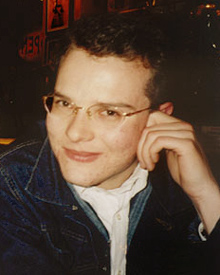 The
solution: a website whose name proved that its users were up to
such a challenging task. Since its upload onto the web, GreatReporter.com
has clocked up over a million page impressions. Today, its hits
are five times stronger than ever before as its creator, Richard
Powell, now 27, tries to reach 80,000 page impressions per month.