 |
|
|
|
|
|
|
 |
|
|||||
 |
 |
 |
 |
 |
 |
|
| feature Stead-fastly getting poor W.T. Stead is one of the key figures in newspaper history. It was his ‘New Journalism’ that sowed the seed for the tabloid journalism of today.
Just one year later, in 1871, Stead became the youngest newspaper editor in the country. Working from nothing, for nothing, to achieve something, for weeks or months on end, is clearly not a new concept in journalism. So if the one of the greatest figures in modern journalism did it, does that necessarily make it right? Lead by example Mike Ward, Head of Journalism at the University of Central Lancashire, says it is very difficult to draw up a hard-and-fast rule regarding free labour because all circumstances are different. Hi cites the “classic situation” of a graduating student, who approaches a company for work experience, in the hope that his or her offering to work for nothing may lead to paid work in the future. “You’re not responding to someone saying ‘I want someone who’s going to work somewhere for six months for nothing – are you interested?’” he says. “You’re actually being proactive in going to somebody and saying I could be good for you, I’m exactly the kind of person you need working in your newsroom. I don’t expect you to take a punt on me. Give me a couple of days – I’ll show you what I can do. “You’ve defined the limits right away. You’re willing to do this for a very short period of time to demonstrate your wares, so to speak.” It seems that the best way a work experience person can minimise the risk of being taken advantage of is to take the lead – to be the boss, essentially. The quality of the experience will depend on this. “It’s down to three things: the level of control the graduate has over the situation, the brevity of that relationship and the way it’s determined.” So what about placements which form part of a course? Isn’t that, to some degree, working for nothing? Not according to Ward. He thinks a placement is a completely different situation, because of the implied “contract” between the student and the company. Although he admits some students have been paid, he doesn’t like the idea because it puts too much pressure on the student to deliver, which he claims would devalue the placement. “The student comes to the company as not a fully finished product… and there is an expectation on the part of the company that they will provide training for that student and feedback and support during the placement, so the company is paying in kind if you like.” Guidelines for the blind Last year, the Periodicals Publishers Association (PPA) and Periodicals Training Council (PTC) drew up a set of guidelines for students taking work placements on PTC-accredited courses. Among the guidelines, it was recommended that students be paid for published work completed on placement. PTC director, Loraine Davies, believes paying to publish is “fair and equitable”. “We should be an industry that pays for work. Whatever a person is doing, we should pay, regardless of whether it’s a student on work experience, a freelancer or full time member of staff.” However, since the guidelines are optional and only applicable to PPA member publishers, they are also in a sense, unenforceable. “We can’t possibly police all the members and convince them all to stick to the guidelines,” she says. “We can only promote them as best as possible.” A penny for your thoughts Yet some publishing houses cannot pay work placement students for budget reasons. Does this not help perpetuate some aspirant journalists’ philosophy (whichever part of the industry they choose to enter) that the only way to break into journalism is to write for nothing? Roz, a freelancer and former regional newspaper journalist, does not believe so. “When I did work experience I wanted to be exploited!” she exclaims. “If they wanted to use my skills and my copy, I took it as an indication that maybe I had some hope of building a career in the industry.” Rin Simpson, a recent Cardiff magazine journalism graduate who hopes to go freelance soon, agrees. “If you’re doing work experience or free work somewhere where you might get a job in the future, then that’s probably worth it because you’re in touch with people who can potentially give you a job.” She adds: “You should only do the free work if you’re going to get something out of it that’s non-financial.” In her case, the non-financial benefit she received as a result of the work experience, was excellent contacts for her contacts book. The butterfly effect. However, one journalist’s gain from working unpaid can be another journalist’s loss, and a loss for journalists everywhere. “If people work for free we all get our pay cut,” says Jason, a former staff writer and current freelancer from Ireland. “Of course it doesn't work exactly like that. It’s not as if editors will suddenly stop paying us, but there is an effect.” The knock-on effect is to drive down pay, undermining the trade as a whole. “More broadly,” he explains, “it runs counter to the continual struggle to get rates up. If a publisher can get quality work for nothing, why should they pay for it?” This explains why Tim Lezard, President of the Nation Union of Journalists (NUJ), views working for nothing as just plain wrong. “It’s exploitation, isn’t
it? Not only are these people working for nothing but they’re
also denying the jobs of proper qualified journalists.” Irish freelancer Jason is similarly conciliatory
about the methods some ambitious writers are using to make a name
for themselves. But given the apparent prevalence of this something-for-nothing practice, it is difficult to discern who is exploiting whom, so subjective is the term, ‘exploitation,’ and whether indeed anyone is being exploited at all. The other side of the coin Richard Parkes Cordock is an entrepreneur and creator of Millionaire MBA, a home-study audio course, which takes tips from the best entrepreneurs to teach others how to be entrepreneurs themselves. Since he is not a writer himself, he recently advertised for student journalists to help him write copy for his business. He explains that enlisting students, having spent thousands of pounds on writers in the past, many of whom have failed to give him the copy he wanted, seems a sensible alternative. According to him, having student journalists work for him for nothing is a win-win situation. He needs the copy and they need the experience writing it. Each party understands this perfectly. “The thing about writing is that it’s such an intangible,” he says. “If you’re paying someone for their writing, you just don’t know at the end of it whether it’s what you want. And as I’ve found, you still have to pay the money and you end up with what you don’t want.” He adds: “Any entrepreneur worth their salt would try to keep their costs down to a minimum. If I was in that same position myself and wanted to do something for experience, I would do it.” It’s not only a sign of the desperate need to assemble a portfolio of work, but also of the competition in journalism, that many student journalists have already written to Mr Parkes Cordock to get that experience. But Heather Welford, a freelance journalist and author from the north east, is unsure about such practices. “I am uncomfortable when would-be freelancers write for nothing,” she admits, “especially when they have other jobs which mean they don’t rely on writing as a source of income. I think it depresses the market rate for people like me. It’s fine to do the occasional ‘pro bono’ work for a deserving cause, and I do this myself. But not too often.” First alternative Jan Murray is a Kent-based freelancer who writes regularly for the education pages of The Guardian and The Independent. As a former teacher, she appreciates that working for nothing is not only part of a journalist’s education, but is also one of the only ways to acquire cuttings. She also takes the view that free work should be offered sparingly. “I think there’s a place for it. But I think new writers need to be careful about doing it too often, because I think they can end up getting exploited.” As owner of a web forum which holds daily discussions on such issues, she suggests that new writers do “on-spec” work instead – that is, that they pitch ideas to editors in the hope of being commissioned to write a piece. “I think that’s fair enough,” she says, “because if I had someone new working for me, I’d really like to see what they could do before I paid them." |
related links |
|
| The
W.T.Stead resource site Periodicals Publishers Association National Union of Journalists (NUJ) |
||
| read also | ||
|
DotJournalism: Writing for free - work experience DotJournalism: Have you ever been experienced? NUJ: The work experience racket Telegraph.co.uk: What you can learn from a dull week
|
||
| “I
was not paid for any of these contributions. After having written
for about nine months I modestly ventured to suggest that, as I was
writing about three leaders a week and half a dozen occasional notes,
the labourer might be worthy of his hire. The editor replied saying
that he was very sorry but that there was no fund available to pay
for outside contributions, and that if I insisted on payment he would
simply have to fall back upon his own unaided pen.”
- W.T. Stead |
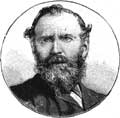 In
1870, Stead began writing articles for the Northern Echo in Darlington.
Many thought that his editor, John Copleston, had adopted an apprentice.
But in reality Copleston had no other journalists who were willing
to work for nothing. The school leaver toiled for over 12 months
for no pay.